


 English
 中文简体
中文简体 عربى
عربى
NEWS
Search by posts
Calendar
Industry News
 By Admin
What Is Spinning? How Spun Polyester Yarn Is Made and Used
Content
- 1 What Is Spinning?
- 2 How Spun Polyester Yarn Is Made: Step by Step
- 3 Ring Spinning, Open-End Spinning, and Air-Jet Spinning Compared
- 4 Spun Polyester vs Filament Polyester: What Is the Difference
- 5 Physical and Performance Properties of Spun Polyester Yarn
- 6 Yarn Count and Twist: Why They Matter
- 7 Fiber Source: Virgin vs Recycled Spun Polyester
- 8 Where Spun Polyester Is Used
- 9 Common Quality Issues in Spun Polyester and What Causes Them
- 10 What to Check When Sourcing Spun Polyester Yarn
- 11 Frequently Asked Questions
- 11.1 Is spun polyester the same as regular polyester?
- 11.2 Why does spun polyester feel softer than filament polyester?
- 11.3 Does spun polyester pill more than other yarns?
- 11.4 Can spun polyester be blended with cotton?
- 11.5 What yarn count should I choose for a lightweight fabric?
- 11.6 Is spun polyester suitable for outdoor or heavy duty products?
- 11.7 What is the difference between ring-spun and open-end spun polyester?
- 11.8 Does recycled spun polyester perform differently from virgin spun polyester?
What Is Spinning?
Spinning is the process of twisting short lengths of fiber, known as staple fiber, into a continuous strand of yarn. When the fiber used is polyester staple fiber, the resulting strand is called spun polyester yarn. Spinning does not describe a single machine or a single step. It describes a chain of mechanical operations, opening, carding, drawing, and twisting, that turn loose, disorganized fiber into a strand strong enough to be woven or knitted into fabric.
The key distinction to understand from the start is that spinning is a fiber-to-yarn process, not a fiber-to-fabric process. It answers the question of how loose polyester fiber becomes usable yarn, not how that yarn becomes a finished textile. Weaving and knitting come after spinning is complete.
Spinning as a technique predates synthetic fiber by thousands of years, originally developed for cotton, wool, and flax. When polyester staple fiber became widely available, spinning mills adapted the same core machinery, carding engines, draw frames, and ring or rotor spinning frames, to process the new synthetic fiber. This is why spun polyester yarn shares so much of its look and feel with traditional cotton yarn, even though the raw material is completely different.
How Spun Polyester Yarn Is Made: Step by Step
Spun polyester starts as polyester staple fiber, short cut lengths typically between 32mm and 51mm, packed in bales. Before any twisting happens, that raw fiber has to be opened, cleaned, and aligned. The main stages are as follows.
Opening and Blending
Bales of compressed staple fiber are broken apart and blended together. This step also removes larger impurities and mixes different fiber batches so the final yarn has consistent color and strength from end to end. For blended yarns, this is also where polyester fiber is combined with cotton, viscose, or other staple fibers before carding.
Carding
A carding machine passes the fiber mass through fine wire teeth that separate individual fibers, remove short or broken pieces, and arrange the fibers roughly parallel to one another. The output is a loose rope of fiber called a sliver. Carding quality has a direct effect on downstream yarn evenness, since fibers that are not properly separated at this stage tend to form thick or thin spots later.
Drawing
Several slivers are combined and drawn out, or stretched, to further straighten the fibers and even out thickness along the strand. This step is repeated more than once, usually two to three passes, to reduce irregularity before twisting begins. Drawing is also where fiber blend ratios are fine-tuned for consistency across the full production batch.
Roving
The drawn sliver is given a light twist to form a roving, which is thin enough to be fed into the final spinning frame without breaking apart. Roving is an intermediate product, not yet strong enough for weaving or knitting on its own.
Final Spinning and Winding
The roving is drafted to its final thickness and given a permanent twist, which is what locks the individual fibers together and gives the yarn its strength. This final twisted strand is the finished spun polyester yarn. It is then wound onto cones, tubes, or bobbins, ready for shipment or for the next stage of fabric production.
Ring Spinning, Open-End Spinning, and Air-Jet Spinning Compared
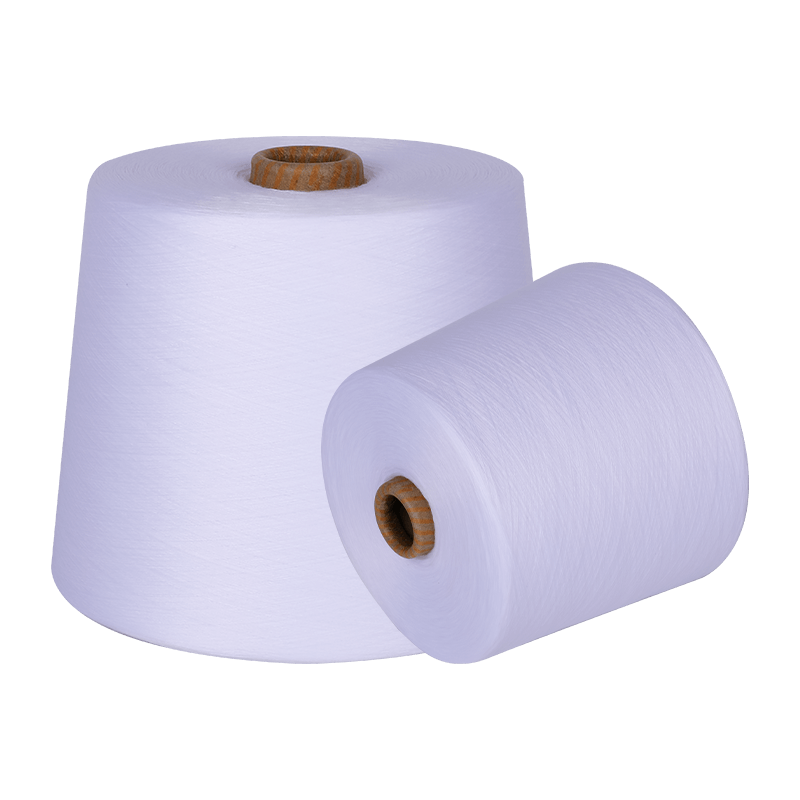
Not all spun polyester yarn is produced on the same type of spinning frame. The three most common methods, ring spinning, open-end (rotor) spinning, and air-jet spinning, apply twist in different ways, and the method used changes the finished yarn's strength, evenness, and cost.
Ring Spinning
Ring spinning is the oldest and most widely used mechanical method. A traveler rotates around a stationary ring while the yarn is wound onto a rotating bobbin, applying twist and winding at the same time. Ring-spun yarn tends to be stronger and more even than rotor-spun yarn, and it can be produced in very fine counts, but the process runs at a slower production speed.
Open-End (Rotor) Spinning
Open-end spinning feeds individual fibers directly into a high-speed rotor, which twists them into yarn in a single continuous step, skipping the roving stage entirely. This makes it faster and lower cost than ring spinning, and well suited to coarser yarn counts. The resulting yarn is generally bulkier and slightly weaker than an equivalent ring-spun yarn, which is why it is more common in home textiles, denim, and industrial fabrics than in fine apparel.
Air-Jet Spinning
Air-jet spinning uses swirling compressed air streams to wrap outer fibers around a straight fiber core, rather than applying a true mechanical twist. It runs at very high speeds and produces a smoother, lower-hairiness yarn than rotor spinning, which is one reason it has become popular for polyester and polyester-cotton blends aimed at knitwear.
Spun Polyester vs Filament Polyester: What Is the Difference
Polyester yarn is produced in two fundamentally different ways, and confusing the two is one of the most common sourcing mistakes. Filament polyester yarn is extruded as one continuous strand directly from molten polymer and is never cut into short pieces. Spun polyester, by contrast, always starts as staple fiber that is cut to a fixed length and then twisted together the way natural fibers like cotton or wool have historically been spun.
This difference in origin changes how the yarn looks, feels, and performs. Spun yarn has thousands of fiber ends protruding from its surface, giving it a matte, slightly fuzzy appearance and a softer hand. Filament yarn has a smooth, continuous surface with a natural sheen.
| Property | Spun Polyester | Filament Polyester |
|---|---|---|
| Fiber origin | Cut staple fiber, twisted together | Continuous extruded strand |
| Surface texture | Matte, slightly hairy | Smooth, with sheen |
| Hand feel | Softer, closer to cotton | Crisper, more slippery |
| Pilling tendency | Higher | Lower |
| Blending with other fibers | Easy, e.g. polyester-cotton | Limited |
| Typical production route | Carding, drawing, ring or rotor spinning | Direct melt extrusion through a spinneret |
Physical and Performance Properties of Spun Polyester Yarn
Because spun polyester still relies on the underlying strength of polyester polymer, it retains most of the durability advantages of the fiber even though it is made of short, twisted pieces rather than one continuous filament.
- Tensile strength: spun polyester yarn typically falls in the range of 4.0 to 5.5 cN per dtex, which is strong enough for apparel, home textiles, and many industrial sewing threads.
- Moisture regain: polyester fiber absorbs very little water, generally under 0.5 percent, which keeps spun polyester fabric quick drying compared to cotton or wool blends.
- Abrasion resistance: the fiber-to-fiber friction created by twist gives spun polyester good resistance to surface wear, though the protruding fiber ends make it more prone to pilling than filament yarn.
- Dimensional stability: spun polyester resists stretching and shrinking under normal use, holding its shape through repeated washing.
- Thermal behavior: polyester softens at higher temperatures than many natural fibers, so spun polyester fabrics generally tolerate normal ironing and tumble drying well, provided excessive heat is avoided.
- Blendability: because it is made from staple fiber, spun polyester can be blended at the fiber stage with cotton, viscose, or wool to combine polyester durability with the softness or breathability of the natural fiber.
Yarn Count and Twist: Why They Matter
Two numbers determine how a spun polyester yarn will behave in a finished fabric: count and twist. Count describes how thick or fine the yarn is. Twist describes how tightly the fibers are wound together.
Yarn Count
Finer counts, commonly in the 30s to 40s range on the English cotton count system, produce lightweight, smoother fabrics suited to shirting and lining. Coarser counts, in the 10s to 20s range, produce heavier fabrics used for canvas, workwear, and bags. A lower number in this system means a thicker yarn, and a higher number means a finer one.
Twist Level and Twist Direction
Higher twist increases yarn strength and reduces pilling but can make the fabric feel harder and less breathable. Lower twist creates a softer, bulkier fabric but with somewhat lower strength. Twist direction, referred to as S-twist or Z-twist, also matters when yarns are plied or when a fabric design calls for a particular surface texture, since combining opposite twist directions changes how light reflects off the fabric surface.
Single Yarn vs Plied Yarn
A single spun polyester yarn can also be plied, meaning two or more single yarns are twisted together, to increase strength and improve evenness for sewing thread or heavier fabric applications. Plied yarns are more expensive to produce but offer more consistent performance for demanding end uses.
Fiber Source: Virgin vs Recycled Spun Polyester
Spun polyester yarn can be made from virgin polyester staple fiber, produced directly from petrochemical feedstock, or from recycled polyester staple fiber, produced by breaking down post-consumer or post-industrial polyester, such as used bottles or fabric scraps, back into fiber form.
In terms of spinning behavior, the two are processed on the same machinery, and recycled polyester staple fiber can be blended with virgin fiber at varying ratios to balance cost, strength, and consistency. Recycled fiber batches can show slightly more variation in color and fiber length than virgin fiber, which is why many spinning mills blend the two rather than using recycled fiber alone for applications where strict color matching is required.
Where Spun Polyester Is Used
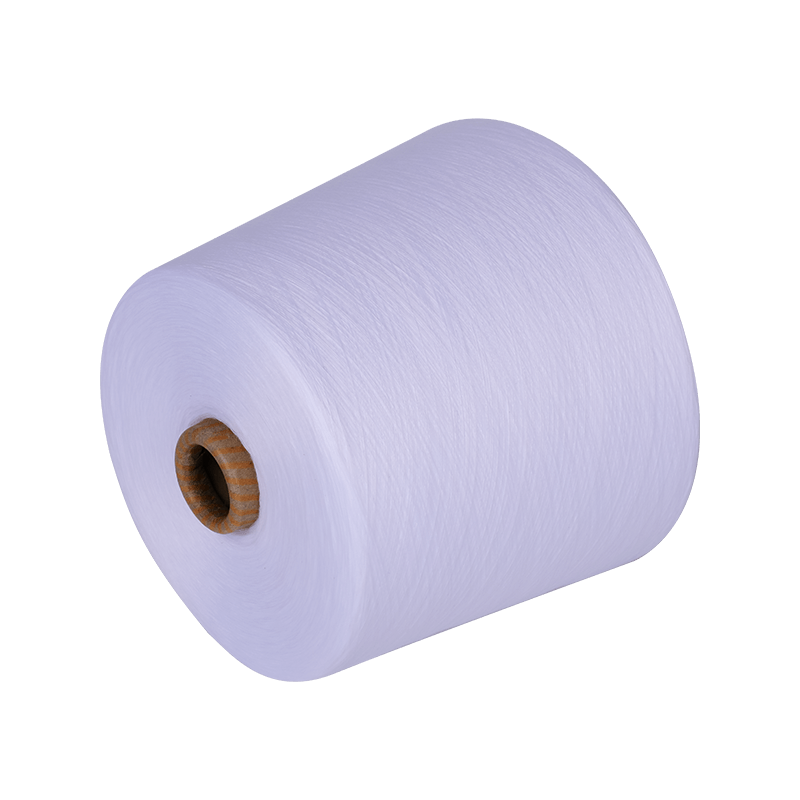
Spun polyester yarn shows up across a wide range of end uses precisely because it can be adjusted by count, twist, and blend ratio to suit very different products.
| End Use | Typical Yarn Count | Why Spun Polyester Fits |
|---|---|---|
| Apparel and shirting | Ne 30 to 40 | Soft hand, easy blending with cotton |
| Home textiles | Ne 16 to 30 | Durability, easy care, low shrinkage |
| Sewing thread | Ne 20 to 60 | High tenacity, consistent strength |
| Workwear and canvas | Ne 8 to 16 | Abrasion resistance, heavier fabric weight |
| Knitwear | Ne 20 to 30 | Bulk and softness from air-jet or rotor spinning |
| Nonwoven and technical fabrics | Coarser, variable | Fiber blend flexibility, cost efficiency |
Common Quality Issues in Spun Polyester and What Causes Them
Because spinning involves many mechanical stages, small process problems can carry through into the finished yarn and later show up as visible fabric defects. Understanding the common causes helps buyers evaluate whether a supplier's process is well controlled.
Uneven Yarn Thickness
Thick and thin spots along the yarn are usually traced back to inconsistent carding or an insufficient number of drawing passes. This shows up in the finished fabric as visible streaks or an uneven, blotchy surface after dyeing.
Excessive Hairiness
Too many loose fiber ends protruding from the yarn surface increase pilling risk and can create a rough hand feel. This is often related to fiber quality, twist level, or the spinning method used, with air-jet spinning generally producing lower hairiness than rotor spinning.
Inconsistent Twist
Variation in twist per inch along the length of the yarn can cause uneven shrinkage and dye uptake, since more tightly twisted sections resist dye penetration differently than looser sections. This is typically a sign of poor machine calibration or fluctuating tension during spinning.
Color and Dye Lot Variation
Blending fiber from different batches without adequate mixing at the opening stage can lead to subtle shade differences across a production run, which becomes more visible after dyeing than in the raw fiber stage.
What to Check When Sourcing Spun Polyester Yarn
Not all spun polyester yarn performs the same way, even at the same stated count. A few practical checks help avoid inconsistent fabric quality down the line.
- Confirm the staple fiber length and denier used, since finer, longer staple generally produces smoother, stronger yarn.
- Ask for evenness and hairiness test data if the yarn is going into a visible fabric surface, since uneven yarn shows up as streaks or thin spots after weaving or knitting.
- Check twist per inch against the intended end use, since a mismatch between twist and application is a common cause of unexpected pilling or stiffness.
- Request a sample dye lot if color consistency matters, since spun yarn from different fiber blends can take dye differently.
- Verify strength and elongation figures rather than relying on count alone, since two yarns of the same count can differ in strength depending on fiber quality and twist.
- Ask which spinning method was used, ring, rotor, or air-jet, since the method affects surface hairiness, strength, and cost even at an identical yarn count.
- Clarify the virgin-to-recycled fiber ratio if sustainability or color consistency is a priority for the finished product.
Frequently Asked Questions
Is spun polyester the same as regular polyester?
Spun polyester is one form of polyester yarn, made from cut staple fiber. It is chemically the same polymer as filament polyester, but the way the yarn is constructed, twisted staple versus continuous strand, changes its texture, strength profile, and typical uses.
Why does spun polyester feel softer than filament polyester?
The short, protruding fiber ends on the yarn surface break up the smooth continuous surface that filament yarn has, which reduces the slippery feel and gives spun polyester a softer, more matte hand similar to natural fiber yarns.
Does spun polyester pill more than other yarns?
Spun polyester generally pills more than filament polyester because the loose fiber ends on its surface can work loose during wear and washing, then tangle into small balls. Higher twist and better fiber quality both reduce this tendency.
Can spun polyester be blended with cotton?
Yes. Because spun polyester starts as staple fiber, it can be blended with cotton at the carding stage, most commonly in ratios such as 65 percent polyester to 35 percent cotton, to combine polyester durability and wrinkle resistance with cotton softness and breathability.
What yarn count should I choose for a lightweight fabric?
For lightweight, drapey fabrics, finer counts in the Ne 30 to 40 range are typical, since a higher count number corresponds to a thinner yarn, which produces a lighter, more fluid fabric.
Is spun polyester suitable for outdoor or heavy duty products?
Coarser, tightly twisted spun polyester yarns hold up well in canvas, bags, and workwear because of polyester's inherent abrasion resistance and low moisture absorption, though very high abrasion applications sometimes favor filament yarn for its smoother, more wear resistant surface.
What is the difference between ring-spun and open-end spun polyester?
Ring-spun polyester is generally stronger, finer, and more even, while open-end spun polyester is bulkier, coarser, and produced at higher speed and lower cost, which makes it more common in home textiles and heavier fabrics than in fine apparel.
Does recycled spun polyester perform differently from virgin spun polyester?
On the same spinning equipment, recycled polyester staple fiber can be processed similarly to virgin fiber, though it may show slightly more variation in fiber length and color, which is why many mills blend recycled fiber with virgin fiber to maintain consistency.
Quick Links
Products
Fill in your information here
