


 English
 中文简体
 عربى
NEWS
Home / News / Industry News / Polyester dyeing: Applications, Selection Criteria, and Practical Guidance
 By Admin
Content
Polyester dyeing is one of the most misunderstood processes in textile manufacturing. A knitter throws a 100 percent polyester interlock into a 60°C reactive dye bath meant for cotton, and the fabric comes out almost unchanged. The dye has nothing to bond with, and the fiber structure is too tight for most dye molecules to enter. The direct answer is clear: polyester can be dyed, but it needs disperse dyes and a dyebath temperature above the boil, normally 125-135°C under pressure, held for 30-45 minutes.
If you make socks, underwear, sweaters, or knitted fabrics, there is a second route that bypasses the dye house entirely: buy colored polyester yarn that was dope-dyed at the polymer stage. This guide explains the chemistry behind polyester dyeing, compares the three commercial methods that actually work, maps the colorfastness ratings you can realistically expect, and helps you decide between post-dyeing and pre-colored yarn.
Polyester is built from poly(ethylene terephthalate) chains that pack into highly crystalline regions. The fiber has almost no ionizable or reactive chemical sites. Cotton carries hydroxyl groups, while wool and nylon carry amino and carboxyl groups; these act as anchors for direct, reactive, or acid dyes. Polyester offers no equivalent anchor, so the only way to introduce color is to make small dye molecules dissolve directly into the polymer matrix.
Water makes this harder. Polyester has a moisture regain of only about 0.4 percent, compared with roughly 8 percent for cotton and 15 percent for wool at 20°C and 65 percent relative humidity. The fiber swells very little in an aqueous bath, and below its glass-transition temperature of about 70-80°C, the polymer chains remain too rigid for dye to diffuse inward.
| Fiber Type | Moisture Regain | Workable Dye Classes | Typical Dyeing Temperature |
|---|---|---|---|
| Cotton | About 8 percent | Reactive, direct, vat, sulfur | 40-90°C |
| Wool | About 15 percent | Acid, reactive | 60-100°C |
| Nylon 6 | About 4 percent | Acid, disperse | 85-100°C |
| Polyester | About 0.4 percent | Disperse only | 125-135°C (HT/HP) |
The practical consequence is straightforward: conventional reactive or direct dyeing at 60-90°C does not work on 100 percent polyester, no matter how long the bath runs. Only a dye class small enough to dissolve into the solid polymer, combined with enough thermal energy to open the amorphous zones, produces a lasting shade.
Disperse dyes are small, planar, mostly non-ionic molecules with very low water solubility. They are milled into particles of roughly 0.1-2 microns and kept in suspension by dispersing agents. At high temperature, individual dye molecules dissolve at the fiber surface and diffuse into the amorphous regions. When the bath cools, the dye is physically trapped inside the fiber, which is why well-dyed polyester does not bleed out in cold water.
Disperse dyes are grouped by energy. E-type (low energy) dyes diffuse rapidly and level well at lower temperatures but have modest sublimation fastness, making them suitable for carrier dyeing at the boil. SE-type (medium energy) dyes offer the best balance of leveling and fastness, so they dominate package and jet dyeing. S-type (high energy) dyes deliver the highest wash and sublimation fastness but require a full 130°C hold for proper leveling.
For a medium shade, a common recipe is 1-2 percent dye on weight of goods, 1-2 g/L dispersing agent, and acetic acid to reach pH 4.5-5.5. At 130°C with a 45-minute hold, dye exhaustion typically reaches 80-95 percent, depending on dye energy and liquor ratio. A pH above 6 can break down the dispersion and reduce color yield, while iron or copper ions in hard water may cause dull or specky shades.
Production dyeing of polyester falls into three families. Carrier dyeing operates at the boil without pressure. High-temperature, high-pressure (HT/HP) batch dyeing is the quality benchmark for yarn packages and fabrics. Thermosol continuous dyeing uses dry heat above 180°C and suits very large woven runs.
| Method | Temperature | Hold Time | Best Suited For | Main Limitation |
|---|---|---|---|---|
| Carrier dyeing | 95-100°C | 60-120 minutes | Blended yarns and fabrics that cannot tolerate high heat | Carriers add chemical handling and a wash-off step |
| HT/HP batch dyeing | 125-135°C | 30-60 minutes | Yarn packages, knitted fabric, garments | Requires a pressurized dyeing machine |
| Thermosol continuous | 180-220°C dry heat | 60-90 seconds | Large volumes of woven polyester | High capital cost; fabrics only |
Within the HT/HP family, jet dyeing is the most common fabric route: the fabric circulates as a rope through a venturi nozzle while the dye liquor pumps continuously, which gives good penetration and levelness. Jigger dyeing, where the fabric moves back and forth through a shallow bath between rollers, is still used for lightweight woven fabrics that need low tension. The core parameters remain pH 4.5-5.5, a temperature of 125-135°C, and a hold time of 30-45 minutes.
Not all polyester yarns take dye the same way. The degree of molecular orientation, crystallinity, and surface area changes how much dye is needed and how long leveling takes. If you are sourcing dyed yarns, this also determines which yarn type is most economical for a given shade.
For hosiery and knitwear producers that want colored filaments without a dye house, colored POY and DTY are available directly from yarn suppliers in a wide range of spun-dyed shades. The 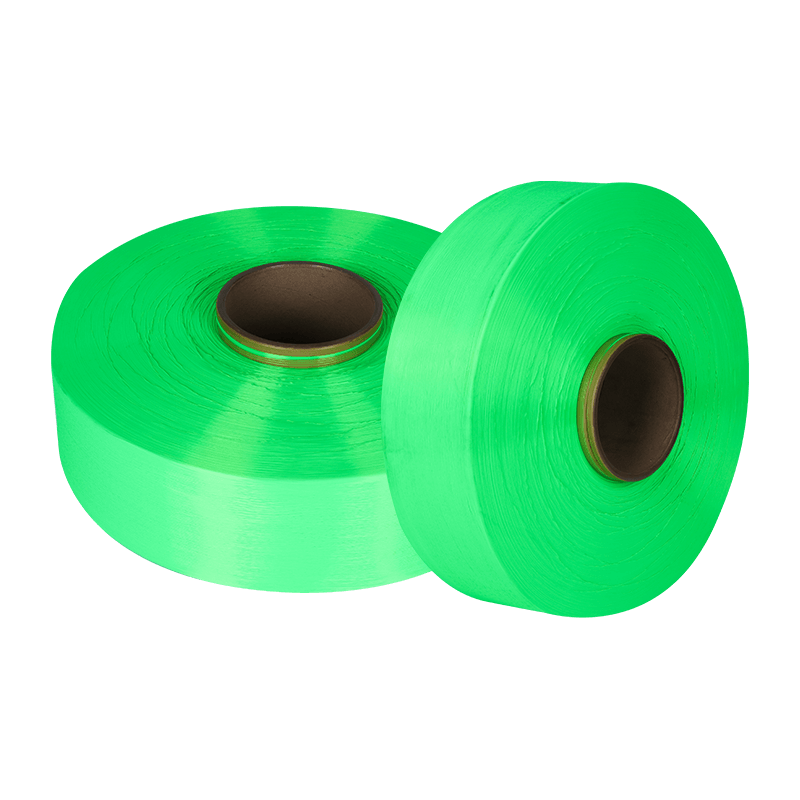 Polyester POY and DTY Yarn for Dope-Dyed Colored FilamentsThis yarn range provides pre-colored polyester filaments directly from suppliers, letting hosiery and knitwear makers obtain spun-dyed shades without running a dye house. It suits producers seeking reliable color and simplified workflows.View Product → range is a typical example of what a dedicated yarn supplier can offer in colored long filaments.
Fastness determines how long a shade survives washing, sunlight, and abrasion. Polyester disperse dyeings are rated on the same scales used for other fibers: wash fastness on a 1-5 scale, light fastness on a 1-8 scale, and rubbing fastness on a 1-5 scale.
| Fastness Type | Scale | Typical Polyester Result | Main Failure Mode |
|---|---|---|---|
| Wash fastness | 1-5 | 4-5 for medium shades after reduction clearing | Thermo-migration during heat setting |
| Light fastness | 1-8 | 5-7 depending on dye energy and depth | Low-energy dyes fade faster |
| Rubbing fastness | 1-5 | 3.5-4.5 wet; 4-5 dry | Surface dye deposits, oligomers |
Two process steps make the biggest difference. Reduction clearing, usually 2-3 g/L sodium hydroxide and 2-3 g/L sodium hydrosulfite at 70-80°C for 15-20 minutes, removes surface dye and oligomers and lifts wet rubbing fastness sharply. Heat setting after dyeing stabilizes the fiber, but it can also push loosely bound dye to the surface; this is why high-energy dyes are preferred for garments that will face ironing or hot drying.
For many polyester applications, the smartest way to control color is to add it before the yarn exists. In solution dyeing, also called dope dyeing, pigments are compounded into the polyester polymer melt before extrusion. The color becomes part of the filament, so there is no dyebath, no water, no carrier, and no reduction clearing step. Some yarn manufacturers describe this product family as environment-friendly doped dyed yarns because the coloration stage produces essentially no liquid effluent.
The trade-offs are real. The color range is limited by masterbatch formulations, the minimum order per color is higher because the extruder must be cleaned between color changes, and a shade adjustment cannot be made by simply adding dye to a bath. Still, for hosiery, underwear, and sweater yarns that repeat season after season, these limits rarely matter. A yarn supplier can carry more than 200 colors and specifications in this product family, which covers most standard stock shades. High-elastic yarns are no exception; manufacturers now offer spun-dyed versions with a broad palette, as discussed in this note on color options for imitation-nylon high-elastic yarn.
A practical example of this product family is the 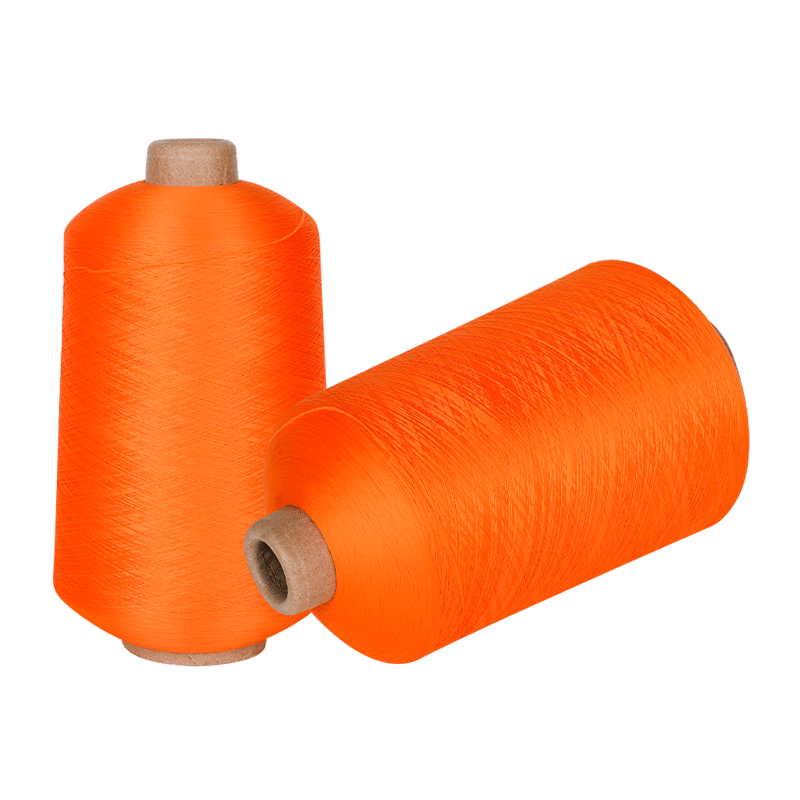 Imitation Nylon High Elastic Yarn with Dope-Dyed Stretch PerformanceThis stretchable polyester yarn mimics nylon's strength and resilience while incorporating dope-dyed color, making it a practical option for sportswear and tight-fitting garments when color must be set before fabric production.View Product →, which combines stretch behavior with dope-dyed polyester color and removes the dye-house constraint from stretch fabric production.
If you are a fabric or apparel producer, the purchase decision is not about which dye recipe to use; it is about where in the supply chain the color is applied. The table below summarizes the differences that influence cost, lead time, and quality.
| Factor | Post-Dyeing (Fabric or Yarn) | Dope-Dyed Yarn |
|---|---|---|
| Color matching | Nearly unlimited range | Limited to masterbatch library |
| Minimum order | Low, from about 50 kg per shade | Higher, often 500 kg or more per shade |
| Lead time | 1-2 weeks plus washing off | Immediate for stock colors |
| Fastness | Good if correctly reduction cleared | Inherently high |
| Water use | 80-150 liters per kg of fabric in typical batch processing | Near zero for coloration |
| Repeatability | Shades vary batch to batch | Very high; color controlled by mass |
| Best fit | Small lots, unique seasonal colors | Repeat colors, large programs |
In short, choose post-dyeing when you need a one-off shade or a small trial lot. Choose dope-dyed yarn when the same colors will run for months, when light fastness requirements are severe, or when your factory has no dyeing capacity at all.
If you are dyeing polyester yarn or fabric in-house, these eight points prevent the majority of shade and fastness failures.
For cotton-polyester blends, the chemistry gets more complicated because the cotton needs reactive or direct dye at alkaline pH while the polyester needs disperse dye in mild acid. The common solution is a two-bath process or a carefully buffered one-bath method. If the blend is specified as colored at source, you can avoid the chemistry entirely: polyester-cotton ring-spun yarn can be ordered with the polyester component already dope-dyed and the cotton portion left natural, producing a heather effect without a dye bath. The 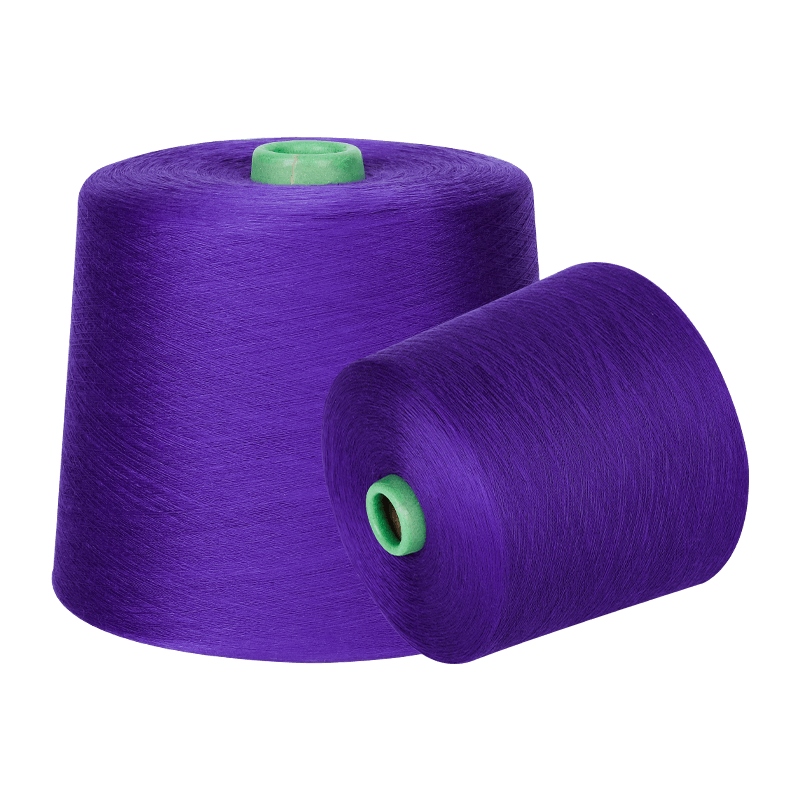 Polyester-Cotton Ring Spun Yarn for Blend Fabrics with Heather EffectsThis blended ring-spun yarn combines polyester durability with cotton comfort and can be ordered with pre-colored polyester for a heather appearance, offering an alternative when you want to avoid complex dyeing chemistry in cotton-polyester blends.View Product → range is one example of how suppliers structure these blended products.
No. Regular household dyes designed for cotton react with ionic groups that polyester does not have, and they cannot penetrate the fiber at 60°C. You need disperse dyes made specifically for synthetic fibers, applied near the boil or, ideally, under pressure at 125-135°C.
For full color yield and levelness, 125-135°C under pressure is the standard. At atmospheric pressure, dyeing at 95-100°C with carriers produces lighter shades and takes 60-120 minutes instead of 30-45.
A complete cycle takes 2.5-4 hours including pre-scour, dyeing, reduction clearing, and rinses. The hold time at 130°C is 30-45 minutes; the rest is heating, cooling, and washing off.
Because the dye had no affinity for the fiber. The usual causes are using a reactive or direct dye instead of a disperse dye, or running the bath below 100°C. Switch to a disperse dye and raise the temperature; you will see uptake within a few minutes at 130°C.
No. Dope-dyed polyester is the same PET polymer. The pigment is embedded inside the filament rather than deposited on the surface, so dope-dyed yarns usually outperform batch-dyed yarns in light fastness, wash fastness, and rub fastness. The only real limitations are a smaller shade library and a higher minimum order per color.
For socks that repeat the same colors through the year, dope-dyed yarn is usually better: faster delivery, no dye-house capacity, and no shade drift between batches. If you need a unique seasonal color in a small trial lot, package-dyed or fabric-dyed yarn is more flexible.
Polyester dyeing is difficult only when you fight the fiber instead of working with it. Give disperse dyes enough heat, control the pH, clear the surface after dyeing, and you get commercial-grade fastness. But for production programs that need color month after month, dope-dyed yarn removes the entire dye-house variable: no water, no carrier, no shade drift, and a supply chain that is simply shorter. Know both routes, and you can decide based on quantity, shade, and fastness rather than guesswork.
