


 English
 中文简体
中文简体 عربى
عربى
NEWS
Search by posts
Calendar
Industry News
 By Admin
What is soft spun polyester?
Content
- 1 How Soft Spun Polyester Is Made
- 2 Key Properties of Soft Spun Polyester Fabric
- 3 Common Uses of Soft Spun Polyester
- 4 Soft Spun Polyester vs. Cotton: A Practical Comparison
- 5 Understanding Spun Polyester Fabric Weights and GSM
- 6 Polyester-Cotton Blends: Why Mixing Matters
- 7 How to Care for Soft Spun Polyester
- 8 Recycled Spun Polyester: Sustainability Considerations
- 9 Identifying Soft Spun Polyester in Products
- 10 Is Soft Spun Polyester Right for Your Needs?
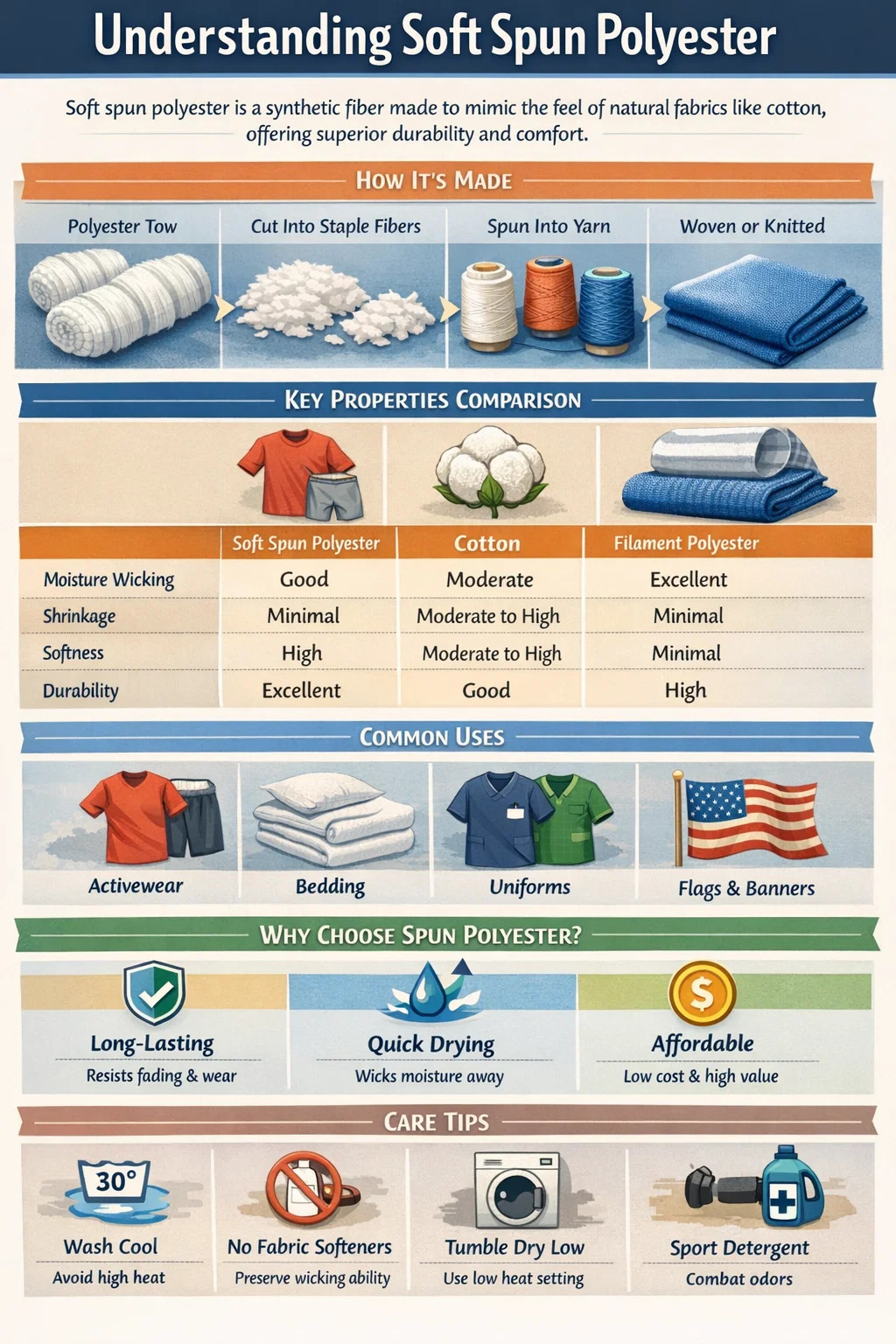
Soft spun polyester is a type of synthetic fiber made by spinning polyester filaments into a yarn that mimics the texture and feel of natural fibers like cotton. Unlike standard polyester, which can feel stiff or plasticky, soft spun polyester undergoes a mechanical process that breaks or cuts the continuous filaments into shorter staple lengths, then twists them together. The result is a fabric with a slightly brushed, matte surface that feels noticeably warmer and more comfortable against the skin. It is widely used in apparel, bedding, and activewear where softness and durability both matter.
If you are comparing fabrics and wondering whether spun polyester is worth choosing over alternatives, the short answer is: for everyday comfort, durability, and value, it is one of the most practical options available in the synthetic fiber category.
How Soft Spun Polyester Is Made
Standard polyester begins as a continuous filament — a long, unbroken thread extruded from melted PET (polyethylene terephthalate) pellets. This filament yarn produces a smooth, slightly shiny fabric that is strong but can feel slick or clammy. To make spun polyester, manufacturers take a different path:
- Polyester is extruded into long tow bundles of continuous filaments.
- The tow is crimped to add texture and then cut into staple lengths — typically between 32mm and 64mm, which is similar to the staple length of cotton.
- These short fibers are carded (combed and aligned), drawn, and then ring-spun or open-end spun into yarn.
- The finished yarn is knitted or woven into fabric.
The spinning process introduces tiny fiber ends that protrude from the yarn surface. These ends scatter light rather than reflecting it uniformly, giving spun polyester fabric its characteristic matte appearance. They also trap air between fibers, which creates insulation and contributes to the soft, lofty hand feel.
Ring spinning produces the highest quality spun polyester yarn, with finer, stronger, and more uniform results than open-end or air-jet spinning. Ring-spun spun polyester fabric is typically used in premium T-shirts and performance athletic wear where both softness and tensile strength are required.
Key Properties of Soft Spun Polyester Fabric
Understanding the physical characteristics of spun polyester helps explain why it has become so prevalent in the textile industry. Below is a comparison of its core properties against cotton and standard filament polyester:
| Property | Soft Spun Polyester | Cotton | Filament Polyester |
|---|---|---|---|
| Moisture Absorption | Low (~0.4%) | High (~8.5%) | Very Low (~0.2%) |
| Moisture Wicking | Good | Moderate | Excellent |
| Shrinkage | Minimal | Moderate to High | Minimal |
| Pilling Resistance | Moderate | Low | High |
| Softness | High | High | Moderate |
| Colorfastness | Excellent | Good | Excellent |
| Cost | Low to Moderate | Moderate | Low |
| Breathability | Moderate | High | Low |
Durability and Tensile Strength
Polyester fibers have a tensile strength of approximately 4.5 to 7.5 grams per denier, which is significantly higher than cotton at 3 to 4.9 grams per denier. This means spun polyester garments resist tearing and abrasion better over time. A T-shirt made from spun polyester can withstand hundreds of wash cycles without significant degradation of the fabric structure, whereas a cotton shirt of the same weight will often thin out and lose shape after 50 to 100 washes.
Colorfastness and Dye Retention
Polyester is dyed using disperse dyes under high heat and pressure, a process that embeds color molecules deep within the fiber structure rather than coating the outside surface. This results in exceptional color retention. Spun polyester fabrics maintain vibrant colors wash after wash — a key reason why athletic jerseys, uniforms, and promotional T-shirts are commonly made from this material. In practical tests, spun polyester typically achieves a colorfastness rating of 4 to 5 on the standard 1–5 ISO scale.
Moisture Management
Because polyester does not absorb moisture the way cotton does, sweat moves through capillary action along the fiber surfaces toward the outer layer of the fabric where it can evaporate. This wicking behavior keeps the wearer drier during physical activity. Soft spun polyester, with its slightly more open fiber structure compared to filament polyester, balances wicking performance with a comfortable feel against the skin.
Common Uses of Soft Spun Polyester
The versatility of spun polyester means it shows up in a remarkably wide range of products. Its combination of softness, durability, and low cost makes it a default choice across multiple industries.
Apparel and Activewear
T-shirts, hoodies, polo shirts, and athletic jerseys are among the most common applications. Brands like Gildan, Bella+Canvas, and Next Level all offer popular spun polyester or polyester-cotton blend shirt styles. A typical 100% spun polyester T-shirt in a 4-ounce weight is lighter and dries faster than a comparable cotton shirt, making it the default option for sports teams and event merchandise. Performance wear for running, cycling, and gym use almost universally relies on spun polyester for its moisture-wicking capability and resistance to stretching out of shape.
Bedding and Home Textiles
Microfiber sheets — which are made from extremely fine spun polyester fibers, typically less than 1 denier per filament — have become one of the best-selling sheet categories in the US market. A standard microfiber sheet set at 90 GSM (grams per square meter) or higher provides a smooth, soft feel that many consumers find comparable to 200-thread-count cotton, at a fraction of the price. Pillow fill, comforter batting, and decorative cushions also rely heavily on polyester staple fiber for its loft, resilience, and hypoallergenic properties.
Workwear and Uniforms
Uniforms for healthcare, hospitality, retail, and food service sectors rely on spun polyester because it holds its shape through repeated industrial laundering at high temperatures. Hospitals, for example, typically launder scrubs at 70°C or higher to meet hygiene standards. Cotton would shrink and degrade rapidly under these conditions; spun polyester maintains both fit and color integrity over hundreds of such washes.
Flag and Banner Printing
Spun polyester is one of the most popular substrates for custom flags and banners used in outdoor advertising. Its resistance to UV degradation, moisture, and tearing makes it far more practical for outdoor use than cotton or standard woven fabrics. Sublimation printing on spun polyester produces vivid, photographic-quality colors that resist fading even with prolonged sun exposure.
Yarn for Craft and Knitting
Soft spun polyester yarn has grown significantly in the craft market. Brands offer bulky-weight spun polyester yarns marketed specifically for their soft texture, making them popular for knitting blankets, scarves, and baby items. These yarns are machine-washable and colorfast, addressing two of the major concerns crafters have with natural fiber yarns like wool.
Soft Spun Polyester vs. Cotton: A Practical Comparison
The cotton vs. polyester debate comes up constantly in clothing manufacturing, and the answer is rarely straightforward. Here is how they stack up across practical considerations that actually affect buying decisions:
- Comfort in heat: Cotton breathes better and absorbs sweat, making it more comfortable in hot, humid conditions where you are not exercising but simply sitting or working. Spun polyester wicks sweat away but does not absorb it, which can feel clammy in very hot static conditions.
- Performance during exercise: Spun polyester wins here. It dries in a fraction of the time cotton does — often 2 to 3 times faster — and resists the heavy, soaked feeling that cotton develops during intense activity.
- Long-term durability: Spun polyester outlasts cotton by a significant margin in repeated laundering scenarios. A spun polyester shirt retains its shape and color after 200+ washes; cotton typically begins to pill, thin, and fade noticeably after 50 to 100 washes.
- Environmental impact: Cotton production requires approximately 10,000 liters of water per kilogram of fiber, while polyester production uses significantly less water but relies on petroleum. Both have environmental costs; recycled spun polyester (made from post-consumer PET bottles) offers a more sustainable option within the polyester category.
- Odor retention: Cotton tends to absorb and hold odors less than polyester after repeated use. Spun polyester can develop persistent odors over time if not laundered properly, particularly in athletic wear. Anti-odor treatments are often applied to spun polyester garments used in activewear to address this.
- Printing and decoration: Spun polyester accepts sublimation printing far better than cotton, producing full-color photographic images. Cotton requires different printing methods (screen printing or DTG) and cannot be sublimation-dyed at all without pre-treatment.
Understanding Spun Polyester Fabric Weights and GSM
Fabric weight is one of the most important specifications when evaluating spun polyester for a particular application. Weight is typically expressed in GSM (grams per square meter) or ounces per square yard (oz/yd²). Here is a practical guide to the weight ranges you will encounter:
| Weight Range | GSM | Typical Application | Notes |
|---|---|---|---|
| Ultralight | 80–110 GSM | Running shirts, race bibs, sublimation flags | Highly breathable, fast-drying |
| Lightweight | 120–150 GSM | T-shirts, polo shirts, event wear | Most common for promotional apparel |
| Midweight | 160–200 GSM | Uniforms, workwear, casual wear | Better drape and structure |
| Heavyweight | 220–280 GSM | Fleece, sweatshirts, blankets | Maximum warmth and durability |
When selecting spun polyester for custom apparel or home textiles, choosing the right GSM is as important as the fiber composition. A 120 GSM spun polyester shirt will feel noticeably thinner and less substantial than a 160 GSM version, even if both use the same yarn type. For uniforms and workwear, a minimum of 160 GSM is generally recommended to ensure the fabric holds up through regular industrial laundering.
Polyester-Cotton Blends: Why Mixing Matters
A large portion of spun polyester fabric on the market is not 100% polyester but rather a blend with cotton or other natural fibers. The most common blends are 65/35 polyester-cotton and 50/50 polyester-cotton, and each serves different purposes.
A 65/35 poly-cotton blend retains most of polyester's durability and moisture management benefits while adding some of cotton's softness and breathability. This ratio is extremely popular in workwear and uniform shirts, where the fabric needs to look professional, resist wrinkles, and survive frequent laundering. The cotton component reduces the slightly synthetic feel that some wearers notice with 100% polyester.
A 50/50 blend moves further toward comfort and is commonly used in casual T-shirts and hoodies where the goal is a fabric that feels close to cotton but with better shape retention. Brands like Gildan's 50/50 series are specifically formulated for this balance, and they are among the most widely purchased blanks in the custom printing market.
One important limitation of poly-cotton blends: they cannot be sublimation-printed effectively unless the polyester content is 65% or higher. Lower polyester percentages produce washed-out, faded sublimation prints because only the polyester fibers accept disperse dyes.
How to Care for Soft Spun Polyester
Caring for spun polyester is considerably easier than caring for natural fibers, but there are still a few mistakes that can shorten the life of the fabric or cause problems:
- Wash in cool or warm water (30–40°C). Polyester can technically withstand higher temperatures, but heat over 60°C can cause slight shrinkage or distortion in the fabric structure over time. Cool washing also saves energy and extends the life of any printed or embellished areas.
- Avoid fabric softeners. Liquid fabric softeners coat polyester fibers with a waxy residue that reduces moisture-wicking performance over time. If softness is a concern, dryer balls achieve a similar effect without chemical buildup.
- Tumble dry on low heat. High dryer heat is the single most common cause of damage to spun polyester. Even at 70°C, repeated exposure can cause pilling to worsen and fibers to lose their loft. Low heat or air drying is preferable.
- Iron at low temperatures only. If ironing is necessary, use a low polyester setting (typically under 150°C) and ideally a pressing cloth between the iron and the fabric. High heat will melt or glaze the surface of polyester fibers permanently.
- Wash activewear inside out. This reduces pilling on outer surfaces and protects printed or embroidered designs from abrasion during the wash cycle.
- Address odors with a specialized athletic detergent or a white vinegar rinse. Standard detergents do not always penetrate polyester fibers effectively to remove built-up oils and bacteria. Products like Sport Suds or Hex Performance are formulated specifically for synthetic performance fabrics.
Recycled Spun Polyester: Sustainability Considerations
One of the more significant developments in the spun polyester category over the past decade is the growth of recycled polyester, often labeled rPET (recycled polyethylene terephthalate). This material is made by melting down post-consumer plastic bottles and processing them back into polyester fiber. According to industry data, producing rPET fiber uses approximately 33–53% less energy than virgin polyester and generates significantly lower greenhouse gas emissions.
Major brands including Patagonia, The North Face, and Nike have incorporated recycled spun polyester into significant portions of their product lines. Patagonia, for example, has reported that a substantial percentage of its polyester use comes from recycled sources. Certifications like the Global Recycled Standard (GRS) or Recycled Claim Standard (RCS) verify that the recycled content claims made on labels are accurate and traceable through the supply chain.
The performance properties of rPET spun polyester are functionally equivalent to virgin polyester in most applications. The main trade-off has historically been cost — recycled polyester typically carries a 10–20% price premium over virgin fiber — though this gap has narrowed as recycling infrastructure has scaled up.
One ongoing concern with all polyester fabrics, including recycled versions, is microplastic shedding. Studies have found that synthetic fabrics release thousands of microplastic particles per wash cycle. Using a microplastic-catching laundry bag (such as the Guppyfriend) or a washing machine filter can significantly reduce the volume of microplastics entering waterways.
Identifying Soft Spun Polyester in Products
If you are purchasing fabric or garments and want to identify whether you are looking at spun polyester versus filament polyester or cotton, here are some practical checks:
- Check the label. The fiber content label should say "100% polyester" or specify a blend percentage. If it simply says "polyester" without specifying "filament" or "microfiber," it is likely spun polyester in a standard apparel context.
- Look at the surface texture. Spun polyester has a slightly textured, matte surface with visible fiber ends. Filament polyester is smoother and may have a subtle sheen. Cotton also has visible fiber ends but typically looks more irregular than spun polyester.
- Perform a burn test. Polyester melts and forms a hard, dark bead when burned, with a sweet chemical smell. Cotton burns cleanly, leaving ash and smelling like burning paper. This test is destructive but definitive when label information is unavailable.
- Test moisture absorption. Apply a small drop of water to the fabric surface. Cotton absorbs it quickly; spun polyester will bead or spread slowly across the surface rather than soaking in immediately.
Is Soft Spun Polyester Right for Your Needs?
Spun polyester is not the ideal fabric for every situation, but it covers a remarkably broad range of use cases better than almost any other single material. Here is a quick framework for deciding:
- Choose spun polyester for activewear, uniforms, event T-shirts, sublimation-printed items, outdoor banners, bedding that needs to stay vibrant and easy to launder, and workwear that faces frequent industrial washing.
- Choose cotton or a cotton-heavy blend for warm-weather casual wear where breathability is the top priority, for people with sensitive skin who find synthetic fibers irritating, or for items where a natural hand-feel and appearance are valued above durability.
- Choose a poly-cotton blend when you want a middle ground — better shape retention and color fastness than 100% cotton, with a more natural feel than 100% polyester.
The dominance of spun polyester in the global textile market is not accidental. Its combination of low production cost, exceptional durability, colorfastness, and adaptability to diverse manufacturing processes has made it the backbone of the synthetic apparel and home textile industries. Global production of polyester staple fiber exceeded 22 million metric tons in 2023, making it the most widely produced textile fiber in the world by a significant margin — and a large portion of that output goes into the soft spun polyester fabrics found in everyday clothing, bedding, and performance wear.
Quick Links
Products
Fill in your information here
