


 English
 中文简体
中文简体 عربى
عربى
NEWS
Search by posts
Calendar
Industry News
 By Admin
Can you iron spun polyester?
Content
- 1 What Is Spun Polyester and How Is It Different from Other Polyester?
- 2 Why Heat Is a Risk for Spun Polyester Fabric
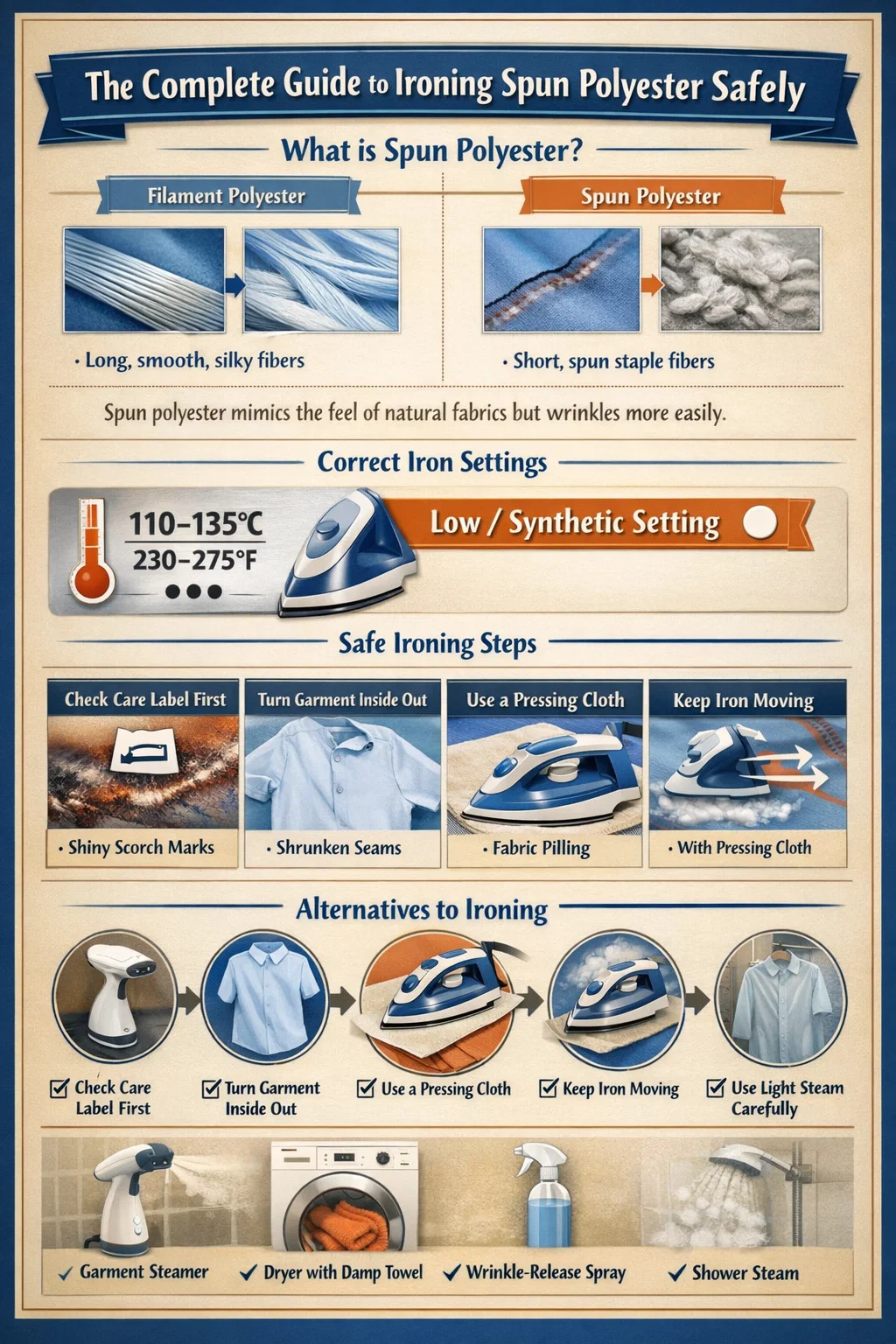
- 3 Correct Iron Settings for Spun Polyester
- 4 Step-by-Step: How to Iron Spun Polyester Without Damaging It
- 5 Common Mistakes People Make When Ironing Spun Polyester
- 6 Alternatives to Ironing Spun Polyester
- 7 Ironing Spun Polyester Blends: What Changes
- 8 How to Prevent Wrinkles in Spun Polyester in the First Place
- 9 Special Considerations: Ironing Spun Polyester Table Linens and Banners
- 10 Quick Reference: Ironing Spun Polyester at a Glance
- 11 Final Thoughts
Yes, you can iron spun polyester — but only with the right precautions. Spun polyester is heat-sensitive, and using a high-temperature iron directly on the fabric will cause permanent damage, including melting, glazing, or shrinkage. The safe ironing temperature for spun polyester sits between 110°C and 135°C (230°F–275°F), which corresponds to the low or "synthetic" setting on most household irons. With that in mind, ironing spun polyester is entirely manageable — it just requires a slightly more careful approach than ironing cotton or linen.
This guide covers everything you need to know: what spun polyester actually is, how its fiber structure affects how it responds to heat, the exact steps for safe ironing, and what alternatives exist if you'd rather skip the iron altogether.
What Is Spun Polyester and How Is It Different from Other Polyester?
Polyester comes in two main forms: filament polyester and spun polyester. The difference lies in how the fiber is constructed.
Filament polyester is made from continuous, long strands of synthetic fiber. It tends to feel smooth and slightly silky, and it's commonly used in linings, athletic wear, and slippery fabrics.
Spun polyester, by contrast, is made by taking short polyester fibers (called staple fibers) and spinning them together in a process similar to how natural fibers like cotton or wool are spun. The result is a fabric with a softer, slightly textured, matte finish that closely mimics the look and feel of natural fibers. Spun polyester is often used in:
- Dress shirts and blouses
- Tablecloths and napkins
- Bedding and pillowcases
- Uniforms and workwear
- Sublimation-printed garments and banners
Because of its spun construction, this type of polyester tends to wrinkle more than filament polyester — which is exactly why people reach for the iron in the first place. The good news is that its slightly heavier, denser weave makes it marginally more forgiving under low heat than the slicker filament varieties.
Why Heat Is a Risk for Spun Polyester Fabric
Polyester is a thermoplastic material. That means it responds to heat in ways that natural fibers don't — once you push past the threshold, the damage is often irreversible.
Here's what can go wrong when ironing spun polyester at the wrong temperature:
Melting and Glazing
At temperatures above roughly 150°C (302°F), the synthetic fibers begin to soften and partially melt. Even if they don't fully melt, the fibers can flatten and fuse together, creating a permanent shiny patch known as glazing or scorch marks. These cannot be reversed — once the fiber structure is compromised, that's it.
Shrinkage and Distortion
Excess heat can cause the spun fibers to contract and pull, leading to localized shrinkage or distortion of the fabric weave. This is especially visible around seams and hems.
Pilling and Fiber Damage
Because spun polyester is made from short staple fibers, aggressive heat combined with pressing pressure can break and dislodge fibers, accelerating pilling over time.
The melting point of standard polyester is around 260°C (500°F), but fabric damage begins at temperatures far below that — often as low as 135°C to 150°C (275°F to 302°F). That narrow window is why precise heat control matters so much.
Correct Iron Settings for Spun Polyester
Getting the iron setting right is the single most important step. Below is a reference table for common fabric types and their recommended iron temperatures, so you can see exactly where spun polyester falls.
| Fabric | Temperature (°C) | Temperature (°F) | Iron Setting |
|---|---|---|---|
| Acetate | 80–90°C | 176–194°F | Very Low (•) |
| Spun Polyester | 110–135°C | 230–275°F | Low / Synthetic (•) |
| Nylon | 120–135°C | 248–275°F | Low (•) |
| Silk | 140–165°C | 284–329°F | Medium-Low (••) |
| Wool | 150–175°C | 302–347°F | Medium (••) |
| Cotton | 180–220°C | 356–428°F | High (•••) |
| Linen | 215–240°C | 419–464°F | Very High (•••) |
Most modern irons label their settings with one, two, or three dots rather than specific temperatures. For spun polyester, always use the single-dot (•) setting — or if your iron has a labeled "synthetic" position, use that. Never use the steam setting without a pressing cloth, and avoid leaving the iron stationary on the fabric for more than a second or two.
Step-by-Step: How to Iron Spun Polyester Without Damaging It
Follow this process exactly and you'll get smooth, wrinkle-free results without any risk to the fabric.
- Check the care label first. Every garment or textile should have a care label with ironing symbols. A single dot inside the iron symbol means low heat — that's your target for spun polyester. If the label shows an iron with an X through it, do not iron the item at all.
- Set your iron to the lowest heat setting. Turn the dial to the synthetic or one-dot position. Allow the iron to fully heat to that setting — if it's still cooling down from a higher temperature, you risk scorching the fabric in the first few passes.
- Turn the garment inside out. Ironing on the wrong side of the fabric gives you an extra layer of protection. Even at low heat, direct contact with the iron soleplate can cause a subtle shine on the outer surface of spun polyester, especially on darker colors.
- Use a pressing cloth. Place a clean, thin cotton cloth (a white pillowcase or a piece of muslin works perfectly) between the iron and the garment. This distributes heat more evenly and prevents direct contact between the soleplate and the synthetic fibers.
- Keep the iron moving at all times. Never let the iron rest in one spot on spun polyester. Use smooth, continuous strokes in the direction of the weave. Staying in one place even for a few seconds concentrates heat and can cause glazing.
- Use steam carefully. Steam can help relax wrinkles in spun polyester, but use it with a pressing cloth in place. Direct steam combined with high heat is more damaging than dry heat alone. A handheld garment steamer is often a better option (more on that below).
- Hang or lay flat immediately after ironing. Once you've removed the wrinkles, don't fold the garment while it's still warm — the heat makes the fabric pliable and prone to developing new creases. Hang it up or lay it flat on a clean surface until it cools completely.
Common Mistakes People Make When Ironing Spun Polyester
Most fabric damage from ironing comes down to a handful of predictable errors. Avoid these and your spun polyester garments will last far longer.
Starting with a hot iron and working down
Some people iron cotton first, then turn the iron down for synthetics. The problem is that irons retain heat — even at a lower setting, the soleplate can still be much hotter than the dial indicates for several minutes. Always let the iron fully cool to the target temperature before touching it to spun polyester.
Skipping the pressing cloth on the right side
Even at the correct temperature, ironing directly on the outer face of spun polyester can create a permanent sheen — particularly noticeable on dark navy, black, or deep red fabrics. The pressing cloth is not optional for these colors.
Using too much pressure
Pressing hard on spun polyester compresses the spun fibers and can flatten the fabric's natural texture. Use light, gliding pressure — the weight of the iron itself is usually sufficient.
Ironing when the fabric is bone dry
Slightly damp fabric is easier to iron and produces better results. If the garment came out of the dryer completely dry, mist it lightly with water from a spray bottle before ironing. This also reduces the temperature needed to relax wrinkles, which means less heat stress on the fiber.
Ignoring print or embellishment areas
Spun polyester is extremely popular for sublimation printing and heat-transfer graphics. Never iron directly over printed designs, appliqués, rhinestones, or embroidered patches — the heat will damage or melt them. Always iron around these areas or use a pressing cloth over them.
Alternatives to Ironing Spun Polyester
If you're uncomfortable with the ironing process, or if the garment's label specifically advises against it, several effective alternatives can remove wrinkles from spun polyester without any heat risk.
Garment Steamer
A handheld garment steamer is probably the safest and most convenient option for spun polyester. Steam relaxes fiber without direct contact — you hold the steamer a few centimeters from the fabric and let the vapor do the work. It won't create sharp creases the way an iron can, but for general wrinkle removal on shirts, blouses, or table linens, it works beautifully. Most garment steamers operate at around 100°C (212°F) at the steam output point, which is safely below the damage threshold for spun polyester.
Dryer with Damp Towel Method
Toss the wrinkled spun polyester garment in the dryer with a damp towel or a few ice cubes. Run on a low or medium heat setting for 10–15 minutes. The moisture creates steam inside the drum, which relaxes the wrinkles. Remove the garment immediately when the cycle ends and hang it up while still warm. This method works well for general wrinkles but won't produce crisp, pressed creases.
Wrinkle-Release Spray
Commercial wrinkle-release sprays (like Downy Wrinkle Releaser) work by relaxing fabric fibers with a light mist of conditioner and water. Spray lightly over the garment, smooth with your hands, and hang to air dry. It's a no-heat, no-fuss solution that works surprisingly well on spun polyester. Results won't be as sharp as ironing, but for daily wear, it's more than adequate.
Shower Steam Method
Hang the wrinkled garment in the bathroom while you take a hot shower. The ambient steam in the room will relax mild to moderate wrinkles over 10–15 minutes. This is entirely heat-free and risk-free, though it works best on lighter wrinkles rather than deep set creases.
Ironing Spun Polyester Blends: What Changes
Many garments aren't made from 100% spun polyester — they combine it with cotton, rayon, spandex, or other fibers to improve drape, breathability, or stretch. The ironing rules change slightly depending on what's in the blend.
Spun Polyester / Cotton Blends (Poly-Cotton)
A 65/35 or 50/50 poly-cotton blend is one of the most common fabric combinations in workwear and casual shirts. Always set the iron temperature based on the most heat-sensitive fiber in the blend — which is the polyester. That means a medium-low setting (around 150°C / 302°F) is the upper limit, with a pressing cloth still recommended. The cotton content does make the fabric slightly more forgiving than pure spun polyester.
Spun Polyester / Spandex or Elastane Blends
Spandex is even more heat-sensitive than polyester. A blend containing as little as 2–5% spandex requires very low heat ironing — or preferably no ironing at all. Heat will destroy the elasticity of spandex permanently, leaving the garment stretched out and misshapen. Stick to the steamer or wrinkle-release spray for these.
Spun Polyester / Rayon Blends
Rayon is relatively heat-tolerant but very sensitive to moisture — steam can cause it to shrink or pucker. For spun polyester/rayon blends, use a dry iron on a low setting with a pressing cloth. Avoid heavy steam.
How to Prevent Wrinkles in Spun Polyester in the First Place
The best way to deal with ironing spun polyester is to avoid the need for it as much as possible. Spun polyester wrinkles less than natural fibers in general, but poor laundry habits can still leave it looking rumpled.
- Remove from the dryer immediately. Spun polyester wrinkles form quickly as the fabric cools in a crumpled state. The moment the dryer stops, take the garment out and hang it up or fold it neatly.
- Wash on a gentle cycle with cool water. High-temperature washing can set wrinkles into synthetic fibers. A cool or warm wash (30–40°C / 86–104°F) is sufficient for spun polyester and far less likely to cause creasing.
- Don't over-stuff the washing machine or dryer. Crowding forces the fabric into compressed positions during the cycle, creating persistent wrinkles that are harder to remove.
- Hang garments to dry instead of machine drying when possible. Gravity and air circulation naturally pull out light wrinkles as spun polyester dries.
- Store folded or hung properly. Leaving spun polyester garments bunched in a drawer or at the bottom of a laundry pile will create deep-set wrinkles that are much harder to remove later.
Special Considerations: Ironing Spun Polyester Table Linens and Banners
Spun polyester isn't just used in clothing — it's extremely popular for tablecloths, napkins, event linens, and promotional banners. Ironing these items presents slightly different challenges.
Table Linens
Spun polyester tablecloths and napkins are a hospitality industry staple because they resist staining and hold color well. To iron them: lay flat on an ironing board, use a pressing cloth, set the iron to low heat, and work in sections. For large tablecloths, a commercial flat iron or a dedicated linen press produces far better, faster results than a standard household iron.
Sublimation-Printed Banners and Flags
Spun polyester is the substrate of choice for dye-sublimation printing because the ink bonds directly with the synthetic fiber at high heat during the printing process. The irony is that once printed, the same fabric becomes quite sensitive to re-exposure to heat. Never iron directly over a sublimation print — the heat can cause the ink to bleed or transfer onto the pressing cloth. If you must iron a sublimation-printed spun polyester banner, work exclusively on unprinted areas or use the steamer method instead.
Quick Reference: Ironing Spun Polyester at a Glance
For a fast summary of everything covered above:
| Factor | Recommendation |
|---|---|
| Iron temperature | 110–135°C / 230–275°F (low/synthetic setting) |
| Pressing cloth | Always use, especially on dark colors |
| Right side vs. wrong side | Iron on wrong side (inside out) |
| Steam | Use cautiously, always with pressing cloth |
| Iron movement | Keep moving — never leave iron stationary |
| Pressure | Light — let the iron's weight do the work |
| Blends with spandex | Do not iron — use steamer only |
| Sublimation prints | Do not iron directly over printed areas |
| Best alternative to ironing | Handheld garment steamer |
Final Thoughts
Ironing spun polyester is straightforward once you understand the fabric's relationship with heat. The core principle is simple: keep temperatures low, keep the iron moving, and put something between the iron and the fabric whenever possible. Follow these steps and spun polyester will come out wrinkle-free without any of the glazing, melting, or distortion that comes from treating it like cotton.
If the ironing process still feels like more trouble than it's worth, a handheld garment steamer is genuinely the most practical investment you can make for maintaining spun polyester garments long-term. It removes the risk almost entirely while still delivering clean, professional-looking results.
Whatever method you choose, the most important habit is simply removing spun polyester from the dryer the moment it finishes — that single step prevents the majority of wrinkles before they ever have a chance to set.
Quick Links
Products
Fill in your information here
