


 English
 中文简体
中文简体 عربى
عربى
NEWS
Home / News / Industry News / What Fabrics Are Stretchy? Complete Guide to Stretch Fabrics and Elastic Yarns
 By Admin
Content
You are standing in a sample room with a half-dozen fabric swatches spread across the table. You pull the edge of a jersey knit, and it stretches easily; you tug on a tightly woven poplin and it barely moves. Buyers and product developers face this exact trial whenever they need apparel that moves with the body: what fabrics are stretchy, and how do you pick the right one without guessing?
Here is the direct answer. A fabric is stretchy when it contains elastic fibers such as spandex (elastane), when it is made from elastic yarns such as covered yarn or rubber elastic yarn, or when it is built with a knit structure of interlocking loops. In everyday practice, the fabrics that feel most stretchy are spandex blends, jersey and rib knits, French terry, stretch denim, scuba, and power mesh. Depending on fiber content and construction, these fabrics stretch from roughly 15% to more than 300% of their original length.
You do not need a fabric made entirely of spandex to enjoy true stretch behavior. Most stretch apparel contains only 2% to 12% elastane. The remaining polyester, nylon, cotton, or rayon gives strength, hand feel, and breathability, while the elastic fiber handles recovery. Keep that ratio in mind when a supplier tells you a fabric is "stretch" — the percentage of elastic content usually tells you more than the label.
Predicting whether a fabric will stretch is far easier when you separate the cause into three layers: the fiber itself, the yarn that carries the fiber, and the fabric structure that arranges the yarns.
Spandex, also called elastane, can elongate to roughly 300% to 500% of its relaxed length and return almost fully to its original size. Rubber fibers behave in a similar way, which is why rubber elastic yarn is used where repeated, forceful stretching and snap-back recovery matter — sock tops, waistbands, and compression bands. By comparison, polyester, nylon, and cotton fibers stretch only 5% to 30% before they reach their limit. So when you feel elasticity in a garment, you are almost always feeling an elastane or rubber component doing the work.
A yarn made from bare spandex is rarely practical: it is slippery, catches light unevenly, and is expensive to use across a whole garment. Yarn producers therefore cover the elastic core with another fiber. Traditional covered yarn (SCY) wraps a spandex core with polyester or nylon filament for firm, even stretch, while air-covered yarn (ACY) uses compressed air to interlace the cover for a softer result. Imitation nylon high-elastic yarn delivers a smooth nylon-like face without the price tag of genuine nylon-spandex. The same spandex core can feel completely different depending on the covering method, so the yarn choice is a design decision, not just a supply detail.
Knitted fabrics are formed from loops. When you pull a knit, the loops open and slide against each other, which is why even a 100% cotton jersey stretches 20% to 40%. Woven fabrics, by contrast, lock warp and weft yarns at right angles, so they stretch only when an elastic yarn is woven into one or both directions. This is the reason stretch jeans contain elastane but a standard cotton poplin shirt does not stretch at all.
Here is the practical shortlist of stretchy fabrics you will meet in apparel production, with the stretch range you can expect from each. These are typical commercial figures for common constructions; actual values shift with fiber count, knit density, and finishing.
| Fabric | Typical Composition | Typical Stretch Range | Best Applications |
|---|---|---|---|
| Spandex blend jersey | Nylon or polyester with 5 to 20% elastane | 100 to 300% | Activewear, swimwear, shapewear |
| Cotton jersey | 100% cotton, or cotton with 2 to 5% elastane | 20 to 40%; with elastane 50 to 150% | T-shirts, dresses, loungewear |
| Rib knit | Cotton, polyester, or cotton-spandex | 30 to 60% | Cuffs, collars, fitted tops |
| French terry | Cotton-polyester-spandex | 25 to 50% | Hoodies, joggers, cardigans |
| Stretch denim | Cotton 94 to 98% with 2 to 6% elastane | 15 to 30% | Jeans, denim jackets |
| Scuba knit | Polyester-spandex double knit | 20 to 40% | Dresses, structured blazers |
| Power mesh | Nylon-spandex | 100 to 200% | Sportswear panels, shapewear |
Stretch is usually expressed as elongation percentage. If a fabric has 50% stretch, a 10 cm strip can be pulled to 15 cm before significant deformation. But elongation is only half of the story. Recovery — the fabric's ability to return to its original size after the load is released — decides whether the garment will sag after a few wears. For most apparel, a recovery rate of 90% or better after repeated stretching is a reasonable target.
Two terms eliminate most sourcing confusion. Two-way stretch means the fabric stretches in one direction only, typically across the width. Four-way stretch means it extends in both the length and width directions, which is the expected baseline for yoga pants, cycling shorts, and performance tops. If you are buying for activewear, specify four-way stretch in your written requirements.
You can evaluate a sample with a simple field test. Mark a 10 cm length on a fabric swatch, pull firmly but not to the breaking point, and measure the stretched length. Reaching 15 cm means 50% stretch; reaching 20 cm means 100% stretch. Then release the fabric and observe how quickly it snaps back — one to two seconds is acceptable for most apparel. This rough test will not replace a lab measurement, but it filters out major mismatches before you commit to a bulk order.
The question "what fabrics are stretchy" often comes back to raw materials. From the yarn side, we produce the elastic yarns that mills knit or weave into stretch fabrics, and three product groups appear in most stretch garments.
Traditional covered yarn wraps a spandex core with polyester or nylon filament in a controlled covering process, producing a yarn with even elasticity and good abrasion resistance. Air-covered yarn uses jets of compressed air to entangle the covering fibers around the core, creating a fluffier and softer yarn that is common in socks and underwear. Both options add stretch without leaving visible rubber or bare spandex on the fabric surface. Our traditional and air covered yarns are produced with adjustable core tension and covering density, which lets us tune the final stretch behavior to the end use.
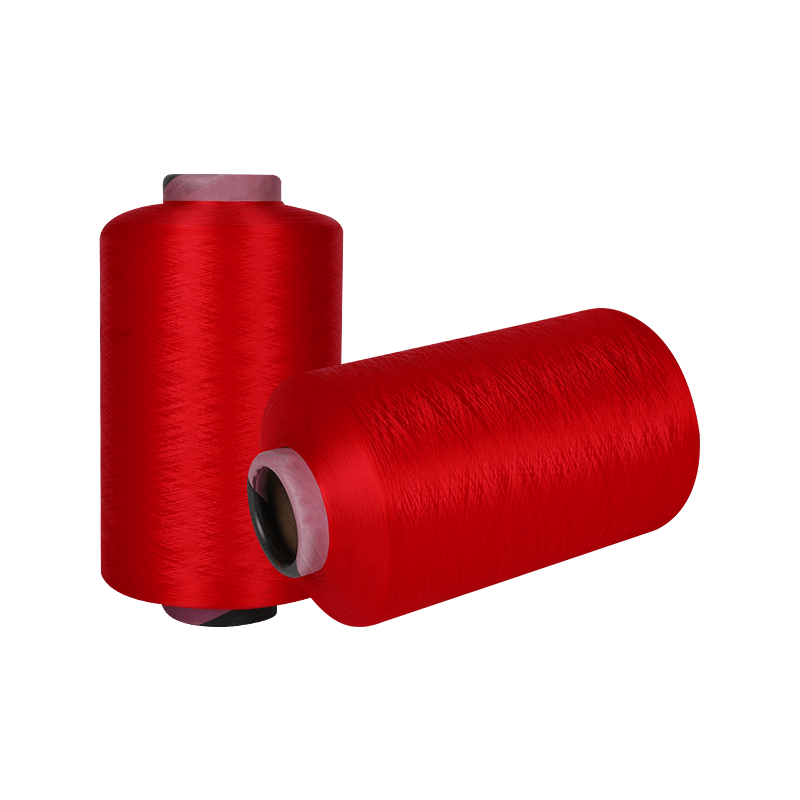 Wholesale Traditional Covered Yarn AIR Covered Yarn Manufacturers, SuppliersZhejiang Zhuji Showtime Industry And Trade Co., Ltd is a China Traditional Covered Yarn AIR Covered Yarn manufacturers and suppliers, ou...View Product →
Rubber elastic yarn uses a natural rubber core wrapped in polyester or cotton. It delivers very high elongation and the strongest recovery of any common yarn type, which is why sock tops, waistbands, and compression bands depend on it. A rubber-core yarn tends to return to its original shape and length after being stretched and released, and that mechanical reliability is what keeps it in demand across legwear and medical-style garments. Because recovery matters more than absolute stretch in most garments, rubber elastic yarn remains a standard specification for bands that need to grip without digging in.
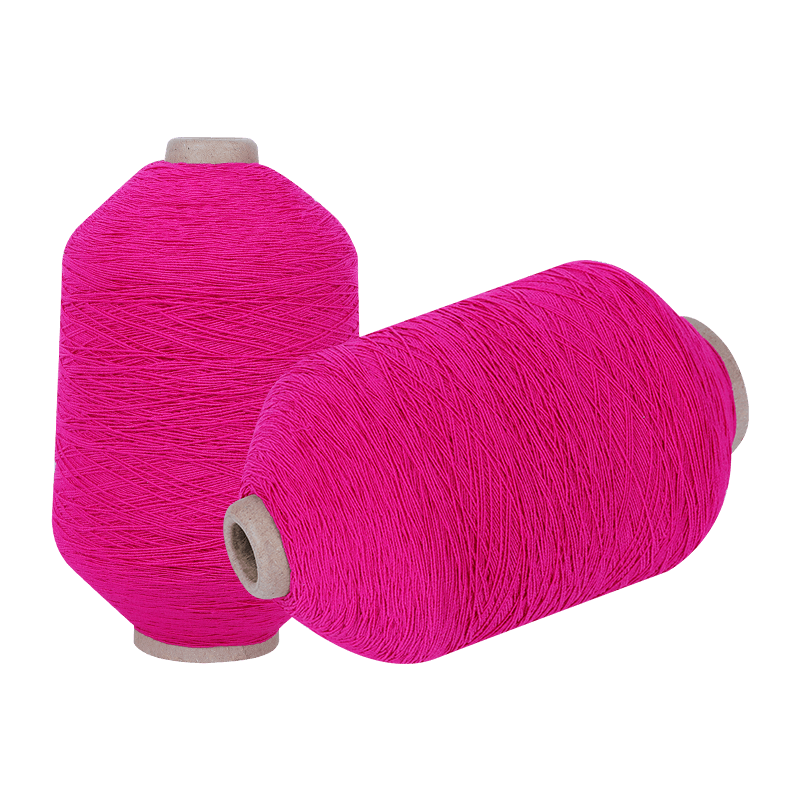 Wholesale Rubbre Elastic Yarn Manufacturers, SuppliersZhejiang Zhuji Showtime Industry And Trade Co., Ltd is a China Rubbre Elastic Yarn manufacturers and suppliers, our company specializes i...View Product →
Imitation nylon high-elastic yarn mimics the smooth surface and soft drape of nylon while providing high elasticity at a more accessible price. It appears in hosiery, everyday sportswear, and underwear where a silky hand feel and dependable stretch are required. Buyers comparing it with true nylon-spandex usually focus on cost, color stability, and consistent stretch behavior; the competitive advantages of imitation nylon high-elastic yarn explain why it has become a popular alternative in price-sensitive segments. For brands that want a smooth nylon look at a lower yarn cost, imitation nylon high-elastic yarn offers a practical option that still meets the stretch expectations of hosiery and lightweight apparel.
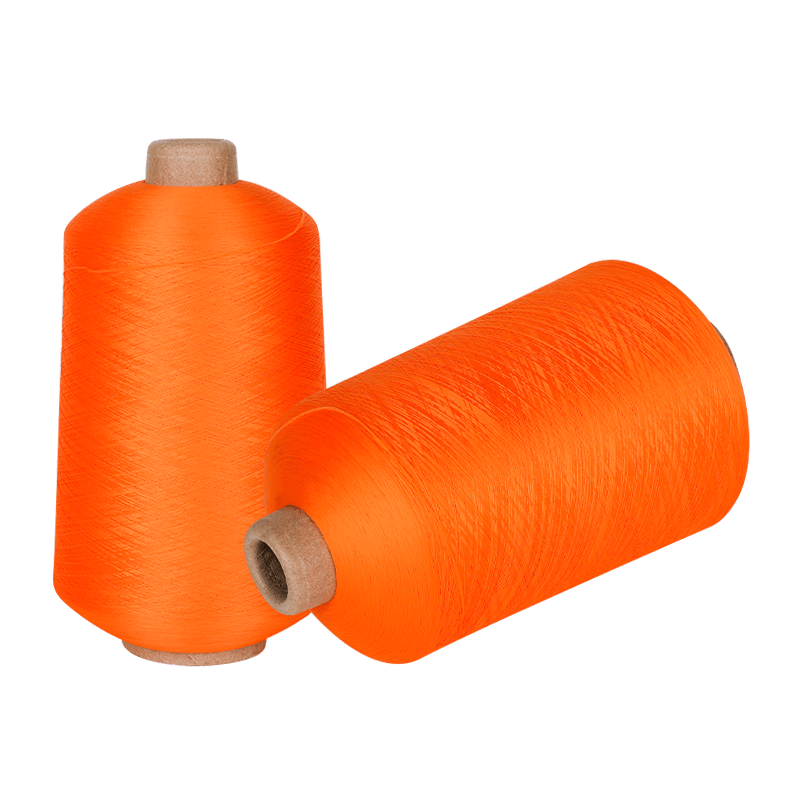 Wholesale Imitation Nylon High Elastic Yarn Manufacturers, SuppliersZhejiang Zhuji Showtime Industry And Trade Co., Ltd is a China Imitation Nylon High Elastic Yarn manufacturers and suppliers, our company...View Product →
The right stretch percentage depends on the application. A sock does not need 200% stretch; it needs enough to slide over the heel and snap back every time. A swimsuit needs far more stretch plus high recovery in water. Choose by application, not by what feels stretchy in your hand.
A good stretch fabric order starts with clear specifications rather than vague words like "a bit stretchy." Put these five questions to your yarn or fabric supplier:
Stretch fabrics are forgiving on the body but delicate in the laundry. The elastic component — spandex, rubber, or covered yarn — loses performance when exposed to high heat, chlorine bleach, or aggressive mechanical washing. If you sell or produce stretch garments, these care rules should travel with the product:
For a deeper walkthrough of how to care for garments made with rubber elastic yarn, our cleaning and maintenance recommendations for rubber elastic yarn clothing cover the practical dos and don'ts.
Polyester filament in a woven construction stretches only about 10% to 15%, so most people describe it as non-stretchy. When the same polyester fiber is knitted, the jersey structure adds a few more percent because the loops can open. To make polyester activewear genuinely stretchy, mills add 5% to 20% spandex or use covered yarns in the seams.
Fabrics with the highest elastic fiber content stretch the most. Nylon-spandex power mesh can reach 200% to 300% elongation, while pure spandex fiber can exceed 500% before breaking. In real garments, a range of 50% to 150% is already more than most daily clothing needs.
Woven cotton has essentially no stretch. Knitted cotton, such as a jersey t-shirt fabric, stretches 20% to 40% because the loops open under tension, but it recovers poorly and can bag out at the elbows. Cotton blended with 3% to 6% elastane keeps the cotton feel and adds dependable shape recovery.
Four-way stretch means the fabric elongates in both the lengthwise and crosswise directions. Most stretch wovens are two-way, while most elastane-blend knits are four-way. For performance apparel, four-way stretch is the expected baseline, because the body moves in every direction.
Yes. Rubber elastic yarn gives the strongest recovery among common yarn types. After being stretched and released, the rubber core pulls the yarn back toward its original length, which is why sock tops and waistbands keep their shape through many wear cycles. The shape recovery behavior of rubber elastic yarn is explained in detail in our technical article.
Run a simple field test: mark a 10 cm length on a cut swatch, pull firmly by hand, and measure how far it extends. If 10 cm reaches 15 cm, that is 50% stretch. Release it and count how many seconds it takes to return close to the original length — one to two seconds passes for most apparel. For a production decision, request the supplier's elongation and recovery test data and run one sample washing cycle.
