


 English
 中文简体
中文简体 عربى
عربى
NEWS
Home / News / Industry News / What Does FDY Mean? Fully Drawn Yarn Guide: Meaning, Process, POY vs DTY vs FDY
 By Admin
Content
FDY stands for Fully Drawn Yarn, the smooth, flat, high-orientation polyester filament behind lining fabric, satin ribbon, taffeta and countless home textiles. If you are specifying a filament for a new woven or knit program, FDY is usually the first candidate to evaluate, because it reaches your loom already stretched to its final gauge.
That single fact controls everything downstream: fabric hand, luster, dimensional stability, dyeing cost, and the risk of yarn breaks in high-speed weaving. The most direct way to understand FDY is to test a filament by hand. Pull FDY and it extends moderately, then snaps with straight, clean ends. Pull partially oriented yarn, or POY, and it stretches much further before breaking. Pull draw textured yarn, or DTY, and it already shows crimp and springiness. That hands-on test fixes the meaning of FDY faster than any dictionary entry.
In technical terms, FDY is the acronym for Fully Drawn Yarn. The same product appears under different names in different markets: FOY (Fully Oriented Yarn), PFY (Polyester Filament Yarn), and SDY (Spin Draw Yarn). The word "drawn" refers to the stretching of the filament while it is still on the spinning line. Melted polymer is extruded through a spinneret, cooled by air, and then stretched between godet rollers that turn at different speeds. The faster roller pulls the filament and aligns the molecular chains, which creates the mechanical profile of FDY.
Because the drawing step happens before winding, FDY packages can go directly onto warping, weaving or knitting machines. For a buyer, this means consistent denier, predictable strength and fewer breaks compared with yarns that still need a separate drawing operation. The term also matters in purchasing documents. FDY is an exact specification; PFY is sometimes used loosely for any polyester filament. When a supplier quote says FDY, confirm the full name, the denier, the filament count, and the luster grade before ordering.
Four names for essentially the same product:
On a modern polyester filament line, FDY is produced in one continuous sequence, from dried chips to wound package. The critical parameter is the draw ratio, because it fixes the balance between strength and elongation.
For semi-dull polyester FDY, mills usually run a draw ratio between 3.5 and 4.5. Push it too high and the yarn becomes stiff and dyes unevenly; keep it too low and the "fully drawn" yarn still behaves like POY. That is why elongation at break is normally the first number an experienced buyer reads on a test report.
The three filament abbreviations that appear on most packaging lists are FDY, POY and DTY. They come from the same polymer family but sit at different stages of the drawing and texturizing process. POY is wound with only partial molecular orientation and is normally a feedstock. FDY leaves the line fully drawn and ready to weave. DTY is made by drawing and texturizing POY on a separate machine, which adds crimp and bulk.
| Property | FDY | POY | DTY |
|---|---|---|---|
| Full form | Fully Drawn Yarn | Partially Oriented Yarn | Draw Textured Yarn |
| Drawing stage | Drawn inline during spinning | Not drawn, wound partially oriented | Drawn and textured on a separate machine |
| Typical tenacity | 3.5-4.5 g/d | 2.0-2.6 g/d | 3.0-4.0 g/d |
| Typical elongation | 25-40% | 120-150% | 20-35% |
| Surface | Smooth, straight, no crimp | Smooth but lower orientation | Crimped, bulky, springy |
| Hand feel | Crisp, silky, flat | Soft but unstable for direct fabric use | Soft, matte, slight stretch |
| Main uses | Lining, taffeta, satin, ribbon, labels | Feedstock for DTY and draw-warping | Socks, sportswear, knitwear, laces |
A weaving mill usually specifies FDY when the fabric must be flat and glossy; a knitting mill usually picks DTY when the fabric must be soft and elastic. POY appears on a purchase order mainly when you operate your own texturizing or draw-warping line. Sourcing teams that need to compare filament behavior across programs regularly use our industry yarn selection guides before placing a trial order.
A standard polyester FDY from a mature production line typically shows 3.5-4.5 g/d tenacity and 25-40 percent elongation at break. This combination lets the yarn run on high-speed jet looms without frequent stops, and fabrics made from fully drawn filaments resist bagging and deformation better than fabrics made from partially drawn yarns.
Regular FDY has a round cross-section and a smooth filament surface, which gives flat, clean fabrics. Luster is controlled by the amount of titanium dioxide added in the melt. Bright FDY has high gloss; semi-dull FDY has a soft satin sheen; full-dull FDY looks almost matte. Trilobal cross-section FDY scatters light and creates the sparkling effect used in fashion taffeta and decorative ribbons.
FDY is dyed mainly with disperse dyes under high temperature. For programs that demand high wash fastness or repeat orders of the same shade, spin-dyed or dope-dyed FDY is a strong option, because pigment is metered into the melt before extrusion and no wet dyeing step is needed. This is the same color-first principle used in our colored yarn range, which covers more than 200 shades and specifications. If you work with stretch yarns and need to know how far the palette can go, our article on color options in imitation nylon high elastic yarn provides a practical reference.
FDY is rarely the first yarn customers name by heart, but it shows up in almost every textile product category. The reason is the combination of smoothness, strength and uniformity that few other filament yarns match.
In narrow-fabric weaving, FDY is frequently plied with spandex to make elastic tape, because its low friction helps the tape run cleanly and uniformly. In knitting, FDY appears in mesh fabrics and open-work structures where close stitch control is required.
A yarn test report looks technical, but only a few numbers predict whether FDY will behave on your machine. The checklist below is common mill guidance, not a fixed global standard, so verify each value against your fabric requirements and supplier capability.
| Indicator | What it means | Typical guidance for FDY |
|---|---|---|
| Nominal denier | Target linear density, such as 75D or 150D | Within about 1.5 percent of the nominal value |
| Denier CV | Variation between packages and inside one package | Below 1.0-1.5 percent for a consistent lot |
| Tenacity | Breaking force per linear density | 3.5 g/d or higher for polyester FDY |
| Elongation at break | Distance the filament stretches before breaking | 25-40 percent, depending on luster grade |
| Oil pick-up | Lubricant and finish content on the surface | About 0.5-1.5 percent by weight |
| Dry heat shrinkage | Dimensional change at 180 degrees C | About 6-9 percent for standard FDY |
| Evenness U% | Thickness irregularity along the filament | Lower is better; ask for Uster test values where available |
For dope-dyed or melt-colored FDY, add a wash fastness check at 40 degrees C, especially for dark shades. The color should stay stable in the same lot over several thousand kilograms, and shade variation should be reviewed against your own roll-to-roll standard.
Start from the end fabric, not from the yarn name. Ask what the product needs most: flat smoothness, bulk with stretch, elastic recovery, or a cotton-like matte surface. The answer points to FDY or to a completely different yarn family.
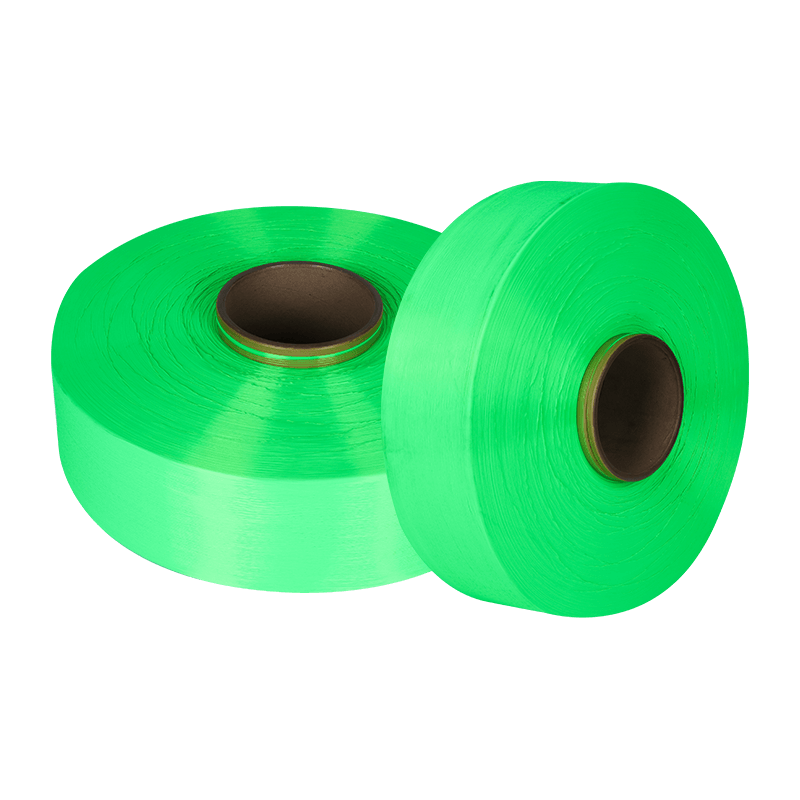 Wholesale Polyester POY / DTY Yarn Manufacturers, SuppliersZhejiang Zhuji Showtime Industry And Trade Co., Ltd is a China Polyester POY / DTY Yarn manufacturers and suppliers, our company speciali...View Product → offer a practical starting point.
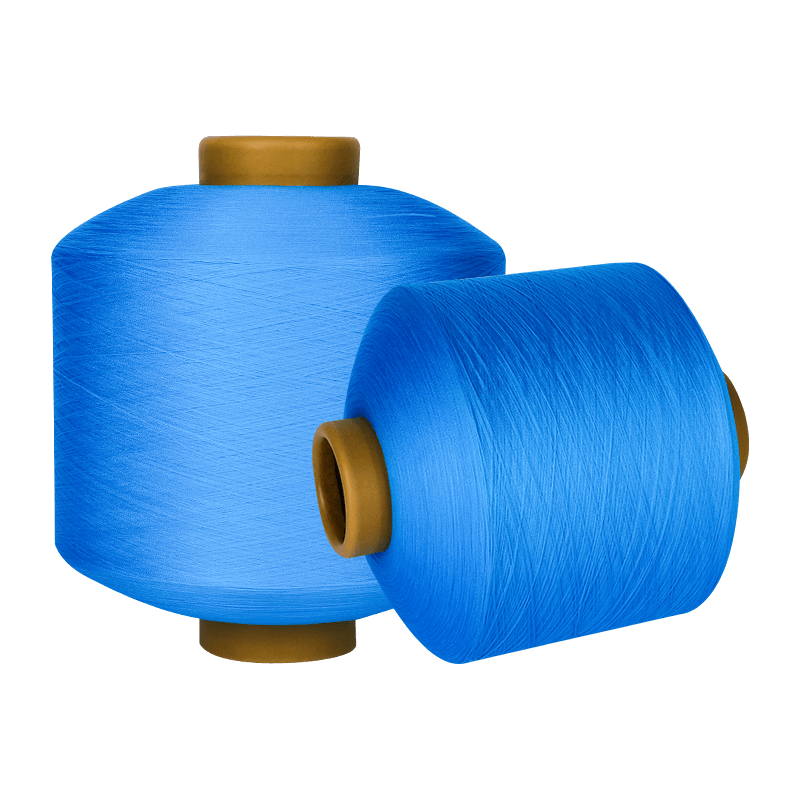 Wholesale PP DTY Yarn Manufacturers, SuppliersZhejiang Zhuji Showtime Industry And Trade Co., Ltd is a China PP DTY Yarn manufacturers and suppliers, our company specializes in custom...View Product → is a regular choice for those lightweight programs.
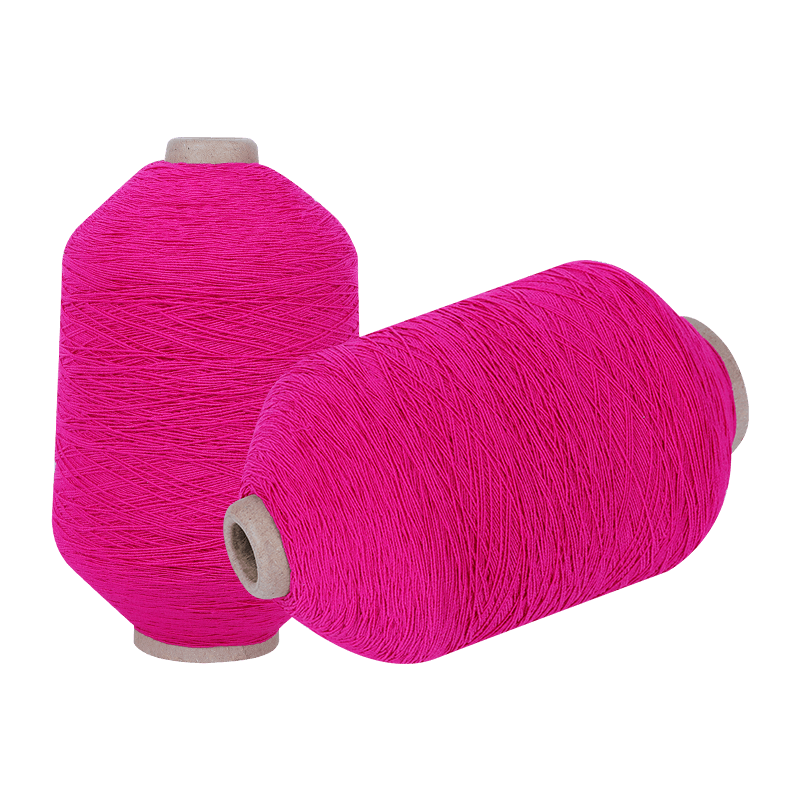 Wholesale Rubbre Elastic Yarn Manufacturers, SuppliersZhejiang Zhuji Showtime Industry And Trade Co., Ltd is a China Rubbre Elastic Yarn manufacturers and suppliers, our company specializes i...View Product →, can be combined with a smooth filament for tapes, laces and knit elastic.
Sourcing tip: Write the full yarn description on your purchase order. "FDY 75D/36F semi-dull" is a complete specification; "polyester yarn" is not. Filament count changes the hand, luster changes the appearance, and every missing detail leads to trial-and-error samples.
FDY fabrics have predictable care behavior because polyester does not absorb much water. The following points cover most woven and knitted products based on fully drawn filaments.
FDY stands for Fully Drawn Yarn. It may also be called FOY, PFY or SDY in different markets. All of these names describe a filament that has been stretched to its final gauge during the spinning process and is ready for weaving or knitting.
FDY is smooth, straight and fully drawn at the spinning stage. DTY is drawn and texturized later, so it has crimp, bulk and a soft matte hand. FDY suits flat woven fabrics; DTY suits knitwear and stretch-oriented products.
FDY has low extensibility. It stretches to a limited degree and returns gently, but it has no active elastic recovery. For real stretch, combine FDY with spandex in the weaving or knitting stage, or use a covered elastic yarn.
Yes, FDY can be dyed with disperse dyes at high temperature. Many programs use dope-dyed FDY to avoid wet dyeing entirely, and colored FDY produced from the melt has very good wash and light fastness in dark shades.
Lining needs a smooth surface that slides over other layers, uniform dyeing, and enough strength for high-speed looms. FDY combines all three. A draw-textured yarn would add bulk that linings do not need.
Take a single filament. FDY resists moderate pulling, breaks with straight ends and feels smooth. DTY shows visible crimp, feels springy and softer. POY stretches noticeably before breaking. A quick comparison under a magnifier confirms the difference.
