


 English
 中文简体
中文简体 عربى
عربى
NEWS
Home / News / Industry News / Rubber Covered Yarn: Types, Strength, Cost, and Buying Guide for Textile Buyers
 By Admin
Content
If you need a yarn that can stretch with the body and return to its original shape after repeated wear, rubber covered yarn is the practical answer. It is a composite product in which a rubber core sits inside a protective sheath made of polyester, nylon, or cotton. The rubber core delivers the stretch and recovery, while the sheath gives the fabric a smooth, colored, and durable surface.
Compared with many other elastic yarns, rubber covered yarn has a firmer and more consistent recovery. It also costs less than premium spandex covered yarn, which is why it remains one of the most widely used elastic yarns in socks, gloves, cuffs, and knit fabrics. If you are sourcing yarn for these applications, you should understand the core denier, the wrapping filament, and the wrapping method before you ask for a quote.
This article gives you a direct, producer-level view of rubber covered yarn. It explains the two main production methods, the construction details that decide performance, the tests you should demand, and the buying questions that prevent expensive mistakes.
Rubber covered yarn is usually made in two ways: traditional covering and air covering. Traditional covered yarn uses a spindle and tension to wind one or two filaments around a stretched rubber core. Air covered yarn uses a high-pressure air jet to interlace the filaments around that same core. The production method changes the surface finish, the speed of manufacture, and the final cost.
Most buyers do not need to choose between these constructions in an abstract way. They need to know which one gives the smoothness, coverage, and cost target required by the garment they are producing. Here is a practical comparison table.
| Feature | Traditional Covered Yarn | Air Covered Yarn |
|---|---|---|
| Construction | Filament is wound around the rubber core under tension | Filament is interlaced with the core using compressed air |
| Surface finish | Smooth, tight, and uniform | Softer and slightly bulky, with occasional surface loops |
| Typical end uses | Socks, gloves, supporting bands, dense knit fabric | Lightweight knits, underwear, elastic webbing, loose-knit garments |
| Elastic recovery | Consistent and long-lasting under repeated stretching | Good, but can vary with air pressure and filament spacing |
| Cost | Higher, because the spindle process is slower | Lower, because air covering runs faster |
Showtime groups traditional covered yarn and air covered yarn into one product range, which helps textile buyers compare both constructions in a single order. This is useful when you need one yarn for a firm cuff and another for a soft knit surface.
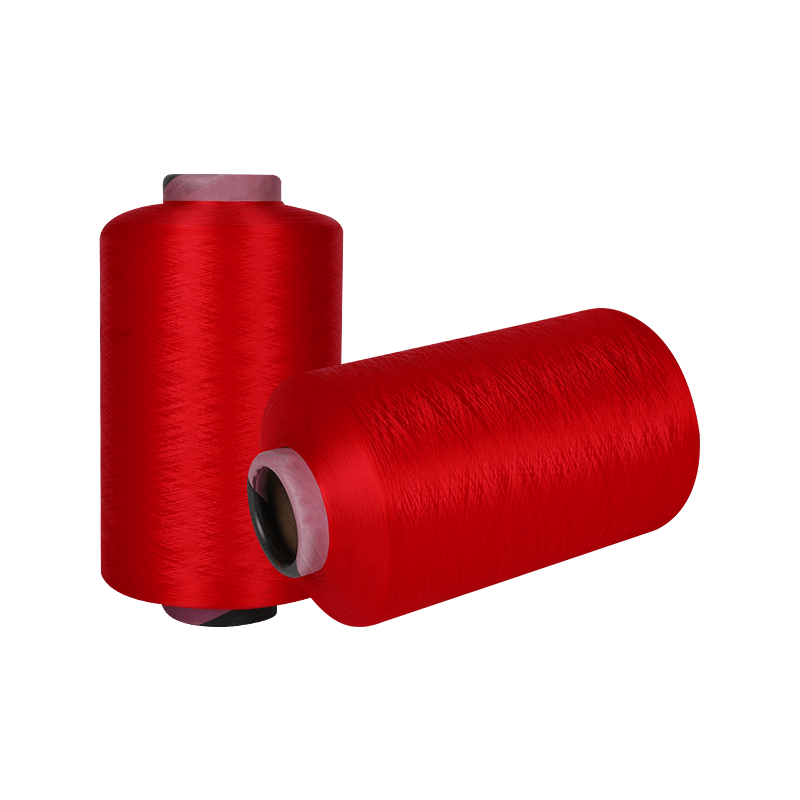 Traditional and Air Covered Yarns for Textile ComparisonShowtime offers both traditional covered yarn and air covered yarn in one range, allowing buyers to compare constructions. The product page explains elasticity, strength, and softness, making it useful for selecting yarns for different knit fabrics.View Product →
The performance of rubber covered yarn is not a mystery. It follows from three variables: the rubber core denier, the filament that wraps the core, and the tension used during wrapping. If you control these three, you control the fabric behavior.
The core is the strongest influence on stretch and recovery. In hosiery and glove yarns, rubber covered yarn is commonly specified with a core range of 40 to 140 denier, depending on the final fabric weight. For fine 20-gauge socks, a 40 to 70 denier core is typical. For heavy cuffs, waistbands, and garment trims, a 100 to 140 denier core gives firmer support.
If the core is too thick, the fabric may feel stiff and the knitting process can become unstable. If the core is too thin, the garment loses its fit after a few hours of wear. The right choice is a controlled balance between desired support and allowable fabric weight.
The sheath material determines how the yarn touches the skin, how it dyes, and how long it resists abrasion. Polyester wrapping gives bright color and strong structure. Nylon adds smoothness and high abrasion resistance. Cotton gives a soft natural hand but can be more difficult to keep uniform. A double wrap with two filaments gives better rubber coverage than a single wrap, and this is especially important in white or very light colored fabrics where a visible rubber line is unacceptable.
Wrap angle and tension are the hidden causes of most defects. If the wrapping is too loose, the rubber core can appear on the surface after a few washing cycles. If the wrapping is too tight, the yarn loses part of its elongation and may snap during knitting. A balanced wrap angle keeps the core centered and the sheath continuous.
To understand how a rubber elastic yarn returns to its original shape after being stretched and released, read our technical article on rubber elastic yarn recovery. This behavior is the reason rubber covered yarn remains the default choice in gloves and everyday socks.
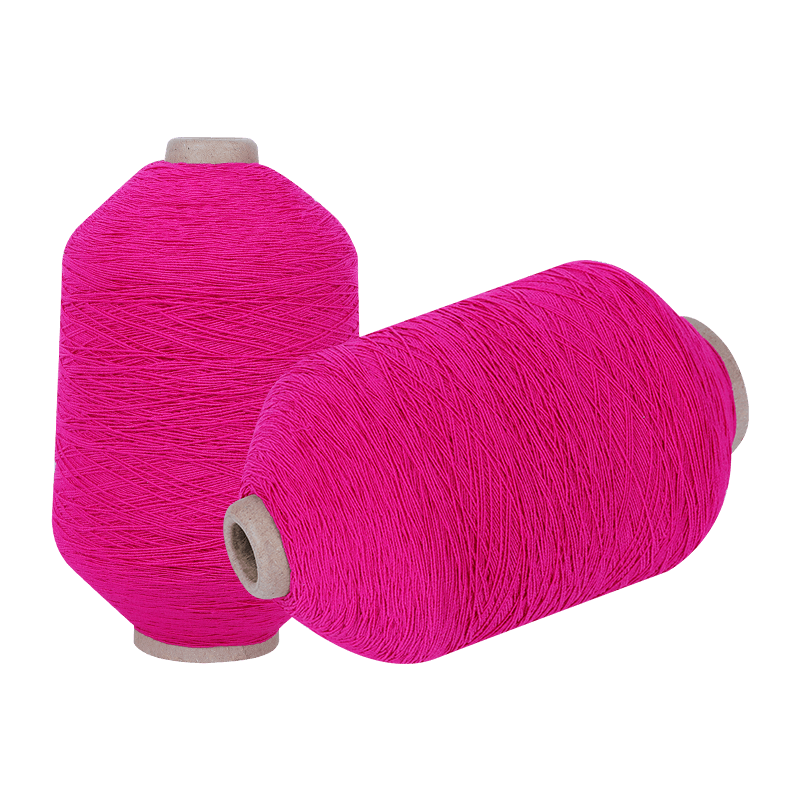 Rubber Elastic Yarn for Gloves and Everyday SocksThis rubber elastic yarn provides high elasticity and returns to its original shape after stretching. It is commonly used in gloves and socks, where consistent recovery and durability are required for everyday wear.View Product →
Do not buy rubber covered yarn on price alone. A usable rubber covered yarn must show defined values for elongation, elastic recovery, sheath coverage, color fastness, and shrinkage. When a supplier gives you these numbers, you can compare them directly with the requirements of your knitting or weaving process. If a supplier cannot provide test results, the yarn is not ready for serious production.
| Test item | Why it matters | Acceptance range for hosiery grades |
|---|---|---|
| Elongation at break | Determines how much the yarn can stretch before it breaks | 500% to 800% |
| Elastic recovery | Shows whether the yarn returns to its length after use | At least 85% after repeated extension |
| Sheath coverage | Prevents bare rubber from showing on the fabric surface | No visible rubber after 2,000 flex cycles |
| Color fastness | Makes sure the sheath keeps its shade in washing and rubbing | Grade 4 or better in washing and rubbing |
| Heat shrinkage | Indicates stability during dyeing and heat setting | 5% or less after heat treatment |
In real production, a typical hosiery specification might have a 70 denier rubber core and two 75 denier polyester filaments wrapped around it. This construction often gives an elongation around 650% and recovery above 85% after repeated extension, which is enough for an everyday sock that stays comfortable through a full workday.
The finished product must decide the specification. If you choose a core denier that is too heavy, the fabric will feel stiff and may be difficult to knit. If the core is too light, the garment will lose its shape after a few hours of wear. Use the end product as the starting point.
For socks, a fine 40 to 70 denier rubber core with a dense polyester wrap works well. It gives a comfortable fit on the foot and enough recovery to keep the cuff in place. Double wrap is preferred in light colored socks because it prevents the rubber core from showing through the knit surface.
Gloves need more abrasion resistance because of frequent handling. A 70 to 100 denier core with a nylon or polyester wrap is a common choice. The sheath must be strong enough to withstand repeated stretching and friction without breaking.
For waistbands and heavy elastic bands, use a 100 to 140 denier rubber core. The yarn must hold a firm grip without becoming hard or uncomfortable. Traditional covered yarn with a tight wrap is often preferred here because it gives a more stable surface.
If you need a high-elastic yarn with plenty of color options but do not want a rubber core, Showtime also offers imitation nylon high elastic yarn. This is not exactly a substitute for rubber covered yarn, but it can help with color richness and softness in lightly elastic garments.
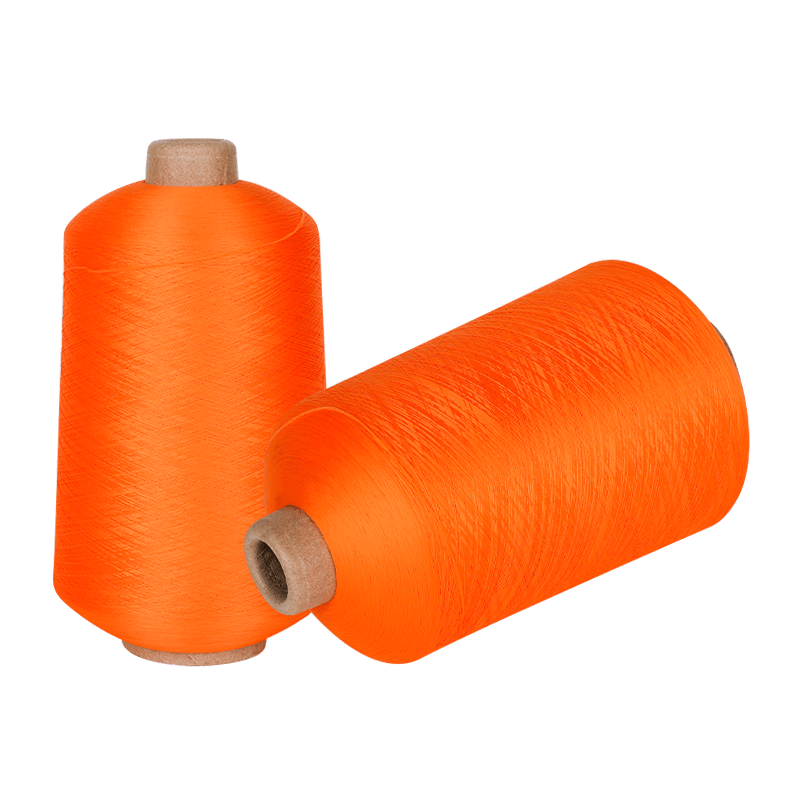 Imitation Nylon High Elastic Yarn for Stretch ApparelThis synthetic yarn mimics nylon properties like strength and abrasion resistance while offering high elasticity. It suits sportswear and tight-fitting garments, and comes in many colors for lightly elastic clothing needs.View Product →
When you buy rubber covered yarn, batch consistency matters more than a perfect sample. This yarn is produced on machines that need careful tension control. A single weak point in the wrapping process can produce rubber exposure in thousands of meters, and this appears as a defect only after the fabric has been knitted.
Showtime, based in Zhuji, Zhejiang, operates as both a manufacturer and a trading company. The company describes its yarns as environment-friendly doped dyed yarns and offers more than 200 colors and specifications across its product lines. Its stated annual production capacity is 30,000 tons, and its product families include traditional covered yarn, air covered yarn, rubber elastic yarn, and imitation nylon high elastic yarn.
Because Showtime can compare different yarn structures, it can help you move between traditional covered yarn, air covered yarn, and rubber elastic yarn without coordinating with several factories. When you request a quotation, ask for the color lot number, the recommended knitting tension range, and the actual elongation test result for the specific core denier you plan to use.
Rubber covered yarn uses a rubber core, while spandex covered yarn uses a polyurethane elastic core. Rubber gives a firmer hand and a more durable recovery, and it is generally cheaper. Spandex is finer and more expensive, so rubber covered yarn remains the standard choice for socks and gloves.
Choose the core denier by the end product. Use 40 to 70 denier for fine socks and light knit garments. Use 70 to 100 denier for gloves and medium cuffs. Use 100 to 140 denier for waistbands, heavy elastic bands, and firm support fabrics.
Yes, but dyeing can shrink the rubber core and affect the final elongation. If the yarn is colored by the filament before covering, the color stays inside the sheath and does not change the core behavior. Colored filament covered yarn is often the safer route for consistent elasticity and color retention.
Air covered yarn is usually cheaper to produce because the process is faster. But traditional covered yarn often provides a tighter and more uniform surface. The real cost decision should be based on the end use: if the surface must be smooth and consistent, traditional covering can be worth the higher price.
Minimum order quantity depends on the supplier and the color. Some producers require a full production lot for a special color, while standard colors can be supplied in smaller quantities. Always confirm the minimum order quantity together with the color lot size before you place the order.
