


 English
 中文简体
 عربى
NEWS
Home / News / Industry News / What Is Dope Dyed Yarn? Process, Benefits, and Supplier Selection Tips
 By Admin
Content
A sock factory in Zhuji used to buy white polyester yarn, send it out for package dyeing, wait ten days for a shade to come back, and still lose the occasional export order because the colour never matched the previous batch. Two years ago the factory switched to dope dyed yarn. Shade changes on the knitting floor now take minutes instead of days, and the finished socks pass third-party wash testing on the first attempt.
If you need one direct answer, here it is: dope dyed yarn, also known as solution dyed yarn or spun dyed yarn, is coloured before the fibre is formed. Pigment is mixed into the molten polymer, and every filament that leaves the spinneret already carries the exact target shade. Because the colour sits inside the fibre rather than on its surface, dope dyed yarn shows markedly better resistance to washing, sunlight, and rubbing than conventionally dyed yarn.
This guide covers the production steps, measurable performance benefits, a head-to-head comparison with conventional dyeing routes, the end products where dope dyed yarn earns its keep, and a practical purchase checklist for textile mills and trading companies.
The word "dope" in textile engineering refers to the viscous polymer solution or melt that is about to be converted into fibres. In polyester production, dope means the molten PET prepared in a screw extruder. Dope dyeing injects pigment into that melt, so the polymer itself becomes the colour carrier. This is fundamentally different from dyeing, where colour is applied to already-spun fibres through water, heat, and chemicals.
The process follows five clear steps:
Because colour is created during the melt phase, the entire wet dye-house operation disappears. There is no grey fabric, no dye bath, no reduction clearing, no drying after dyeing, and no shade matching at the finishing stage. The yarn arrives at the knitting or weaving machine ready to use.
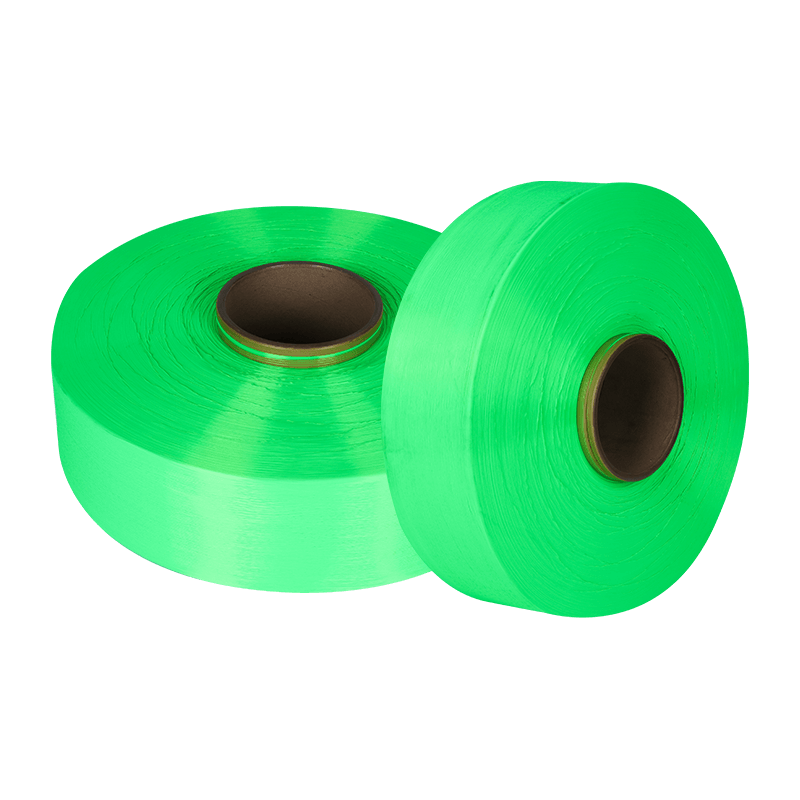 Polyester POY / DTY Yarn for Dope Dyed ProductionThis partially oriented and drawn polyester yarn is delivered ready for knitting or weaving, removing the wet dye-house step. Its melt-phase coloration aligns with the article's focus on cutting water and energy use.View Product →
The economic and environmental advantages all come from removing the dyeing step, not from the pigment itself. A knitter who buys dope dyed POY or DTY eliminates a separate yarn dyeing subcontractor, shortens the supply chain by several days, and removes a major source of shade variation. For high-volume programmes such as socks, underwear, and activewear, this simplification is often more valuable than the materials cost difference.
The pigment particles are locked inside the polymer matrix, so there is no surface dye layer to lose during washing, rubbing, or perspiration. This is why dope dyed polyester typically earns grey-scale ratings of 4 to 5 for washing fastness, while conventional piece-dyed equivalents frequently settle at 3 to 4. Comparative test results published by textile mills and sustainable textile programmes consistently place solution-dyed materials ahead when garments are washed repeatedly at 40 C to 60 C.
Industry water footprint data commonly cited by textile sustainability programs estimates that conventional polyester piece dyeing consumes 50 to 100 litres of water per kilogram of fabric. Dope dyeing bypasses the dye bath almost entirely, which is why mass pigmentation is generally reported to reduce water consumption by roughly 70 to 80 percent and to cut energy use by avoiding repeated heating of dye liquor. There are also no spent dye baths to treat, and no dyeing auxiliaries to purchase. For mills that already run recycled-content programmes, the environmental argument becomes even stronger, since both recycled feedstock and mass coloration reduce the overall footprint.
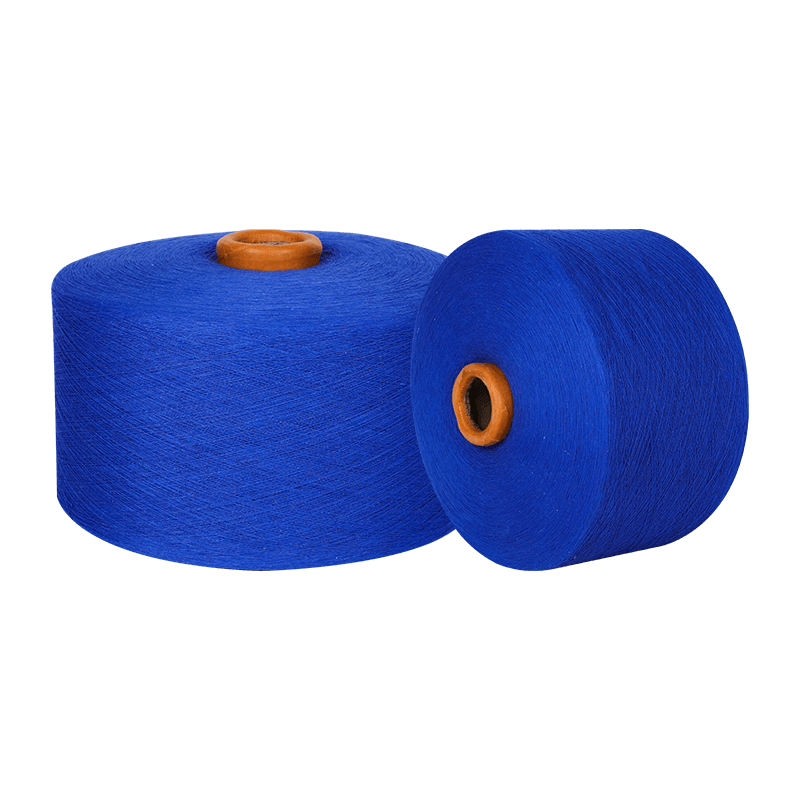 Recycled Cotton Open-End Yarn for Sustainable SpinningMade from reclaimed cotton textiles and production waste, this OE yarn supports the article's point that recycled feedstock strengthens the environmental case when combined with mass coloration.View Product →
Buyers who want to understand how recycled cotton yarn can work alongside dope dyeing in the same factory can read our notes on the environmental and quality development of recycled cotton OE yarn.
Dope dyeing doses pigment by weight at the extruder, so repeatability depends on precise masterbatch weighing rather than dye-bath chemistry. Production runs stay uniform from the first kilogram to the last tonne. Rework caused by off-shade batches drops sharply, and because the dye-house queue is removed from the critical path, the manufacturing lead time becomes easier to predict.
The choice between dope dyeing and conventional dyeing is rarely about which one is "better" in the abstract. It depends on your production volume, colour range, fastness requirements, and supply chain structure. The table below sets out the practical differences for polyester yarn and fabric buyers.
| Parameter | Dope Dyed Yarn | Piece Dyeing | Package Dyeing |
|---|---|---|---|
| Colouring point | Inside polymer melt | Finished fabric surface | Yarn package surface |
| Shade consistency | Very high between batches | Operator and lot dependent | Moderate, can vary by package |
| Wash and rub fastness | Grey scale 4 to 5 | Grey scale 3 to 4 | Grey scale 3 to 4 |
| Relative water use | Lowest, 70 to 80 percent less | Highest | Medium |
| Typical production route | Melt mixing then spinning | Weave or knit then dye | Wind package, dye, rewind |
In practice, dope dyed yarn offers the best total cost when the same shade runs in volume over weeks or months. Conventional routes remain flexible for fashion colours that change every season. Many Chinese yarn producers, including Zhejiang Zhuji Showtime Industry And Trade Co., Ltd., solve this problem by keeping a large standard shade library so buyers get flexibility without paying for small-lot dyeing.
Dope dyed yarn is an ideal feed for both knitting and weaving, as the manufacturer describes its own product positioning. The biggest operational gains appear in products that demand durable colour and high production efficiency: socks, underwear, and sweaters are the classic examples, but the same logic applies to sportswear, outdoor textiles, and home furnishings. Polyester yarn coloured in the dope does not fade in sunlight the way surface-dyed yarn can, which makes it particularly suitable for curtains, awnings, swimwear, and automotive interior fabrics.
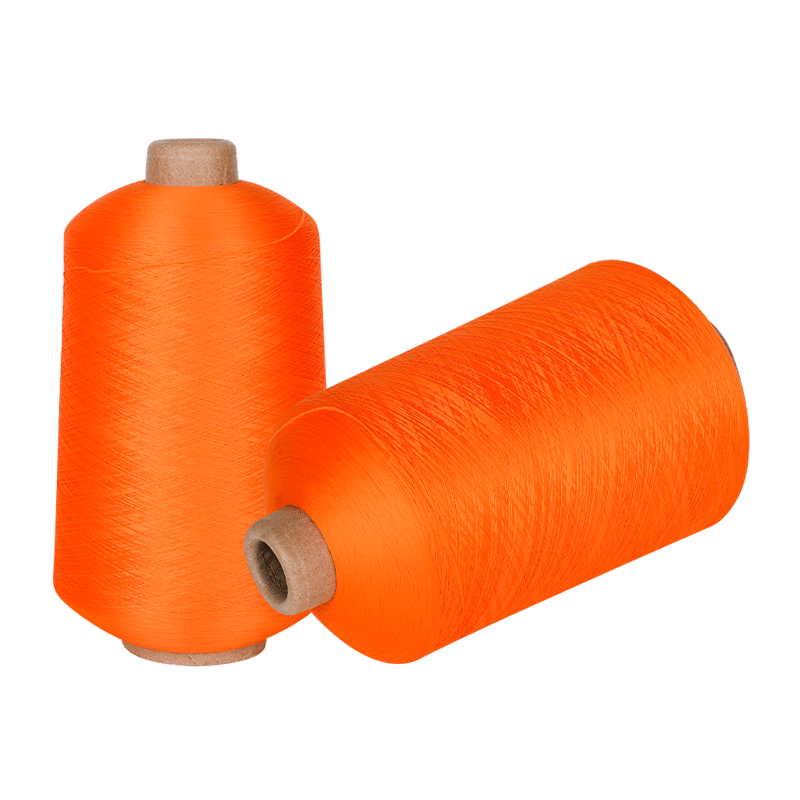 Imitation Nylon High-Elasticity Polyester YarnThis stretchy, abrasion-resistant yarn suits socks, underwear, sportswear, and outdoor textiles. Its fade-resistant properties make it a practical fit for curtains, awnings, and automotive interiors mentioned in the context.View Product →
Typical end uses with strong fit:
For sock manufacturers who also need stretch recovery in the leg and foot, dope dyed polyester can be combined with covered or elastic yarns at the knitting stage. The colour remains consistent and the functional yarn handles the stretch requirements.
Dope dyeing removes many traditional defects, but it introduces a different set of quality considerations. The pigment dispersion, masterbatch dosing accuracy, and polymer base quality all need verification. Use the following checklist when evaluating a dope dyed yarn supplier.
A practical mill test is worth more than any spec sheet. Order a sample spool, knit a few metres of fabric, and compare it with your existing standard under controlled light. If the sample survives a normal production cycle without shade drift, the bulk order has a much higher chance of success.
Dope dyed yarn usually commands a small premium over plain white yarn because the pigment and masterbatch cost are included. The premium disappears once you compare it with the combined cost of white yarn plus package dyeing or fabric dyeing. The economics improve further for long production runs, where the same colour can be run for weeks without re-cleaning the line.
The most practical cost factor is the shade library. A supplier that carries more than 200 standard colours allows buyers to order existing shades without paying for custom masterbatch development. Custom colours remain possible, but they typically require larger minimum quantities because the masterbatch needs a dedicated production run.
| Capability | Published detail |
|---|---|
| Annual output | 30,000 tons |
| Colour library | More than 200 colours and specifications |
| Main product forms | POY, DTY, ring-spun, covered yarn, elastic yarn |
| Export markets | USA, Mexico, Russia, Egypt, Japan, Vietnam, Thailand, Uzbekistan, Africa, Southeast Asia |
Supply reliability is as important as price. A producer with complete in-house spinning and finishing equipment can control the entire process from masterbatch dosing to packaging. That shortens communication lines and makes emergency colour confirmation possible. When you are planning seasonal production, confirm lead time, shipping method, and how the supplier handles a problematic batch before signing the contract.
Yes. Dope dyeing, solution dyeing, spun dyeing, and mass pigmentation all describe the same technical route: pigment enters the polymer dope before the fibre is extruded. Buyers in different regions use different terms, but the product behaviour is identical.
Per kilogram, dope dyed yarn usually costs more than undyed white yarn. But the total cost picture is different. When you compare dope dyed yarn against white yarn plus package dyeing or fabric dyeing, the dope dyed route often ends up cheaper because it removes the dye-house labour, water, energy, and logistics. For long runs on a fixed shade, the cost advantage is strongest.
Fashion programmes with frequent small-lot shade changes are the classic mismatch. If you need a brand new colour every week in quantities below the supplier's minimum, the practical and financial advantage of dope dyeing disappears. Printed fabrics and multicolour melange effects also rely on conventional dyeing or printing rather than mass pigmentation.
The most reliable laboratory method is cross-section microscopy. In a dope dyed fibre, pigment particles are visible throughout the entire cross section. In a conventionally dyed fibre, colour concentrates near the surface or in an outer shell. A solvent dissolve test can also help, since the interior of a dope dyed fibre remains coloured even when the surface layer would lose dye in a harsh bath.
Yes, and this is a standard production method. Dope dyed polyester yarn forms the visible body of the sock, while covered yarn or rubber elastic yarn is fed into the same knitting process to provide stretch and recovery. The colour stays consistent because the dope dyed filament does not fade or crock under the mechanical stresses of knitting and wearing.
Dope dyed yarn is not an experimental niche material. It is a proven production route that saves water, removes process steps, and delivers colour that stays stable through washing, sunlight, and abrasion. The real work is finding a supplier with a solid colour library, reliable masterbatch control, and enough production capacity to keep your shades consistent across every delivery.
If you are planning a new season of solid-colour knitwear, socks, or underwear, compare your existing dyeing cost against a dope dyed yarn programme. Review the full dope dyed yarn range, confirm the shade library, knit a test sample, and let the fabric decide for you.
