


 English
 中文简体
中文简体 عربى
عربى
NEWS
Home / News / Industry News / Multifilament Yarn: Complete Guide to Types, Benefits, Applications and Buying Tips
 By Admin
Content
Multifilament yarn is a continuous structure composed of several fine monofilaments twisted or interlaced together. The most important conclusion: it provides the tensile strength and uniformity that knitters and weavers need while keeping the fabric soft and drapable. For manufacturers involved in socks, underwear, sweaters, and other knitwear, choosing the right multifilament yarn is a production decision that directly affects quality, dyeing consistency, and operating cost.
This guide explains what multifilament yarn is, how it differs from monofilament and spun yarn, what types are available, and what to check before placing an order. The practical focus is on selecting a yarn that fits your machines, your target finished product, and the local market demands.
Multifilament yarn contains two or more continuous filaments running parallel or slightly twisted together. Unlike a spun yarn, which is made from short staple fibers twisted in a random pattern, the filaments in a multifilament yarn are continuous. This structural difference gives multifilament yarn a very smooth surface, high breaking strength, and lower elongation variation.
A common specification for a polyester multifilament yarn is 150 denier with 48 filaments. That means each individual filament has a linear density of roughly 3.1 denier. When the filament count increases while denier stays the same, the yarn becomes softer and more flexible. When denier increases, the yarn becomes heavier and stronger. Understanding this filament count versus denier relationship is the first step in choosing a correct yarn.
The table below shows how typical multifilament yarn styles differ in composition and behavior.
| Style | Filament count | Typical denier | Fabric feel |
|---|---|---|---|
| POY | 24-144 | 75-300 | Firm, suitable for texturizing |
| DTY | 24-144 | 75-300 | Soft with texture and stretch |
| FDY | 24-144 | 50-300 | Smooth and silky |
| PP DTY | 36-120 | 100-300 | Lightweight and moisture-resistant |
For a production line that needs a stable base yarn, polyester POY and DTY are the most widely used multifilament materials.
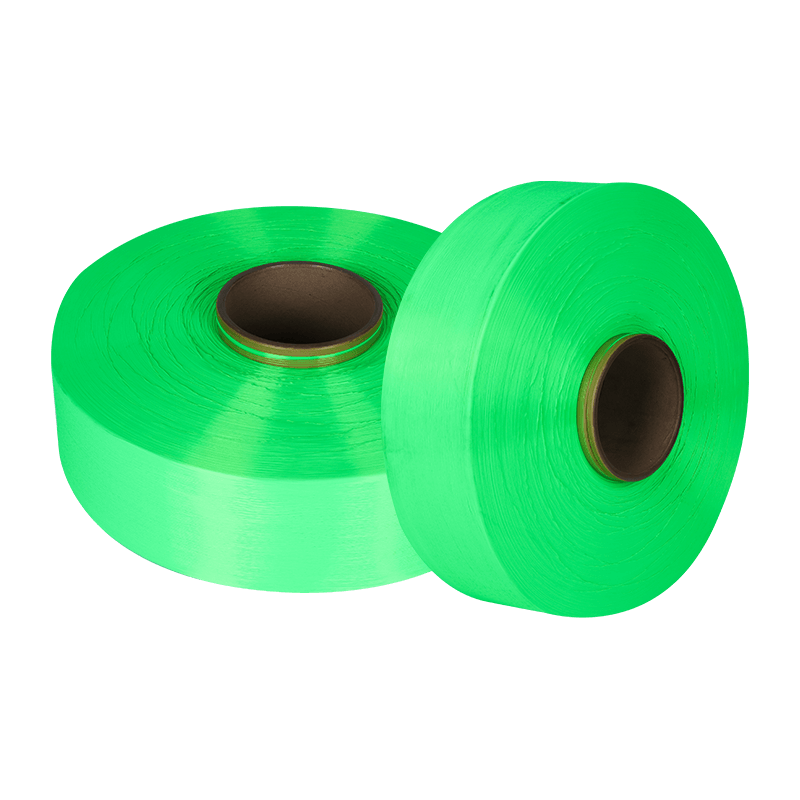 Polyester POY / DTY Yarn ManufacturerPolyester POY / DTY YarnView Product →
When compared with ring-spun cotton or open-end recovery yarn, multifilament yarn brings several concrete advantages to the production floor.
These quantitative and operational differences matter because they directly translate to lower rejection rates and more predictable fabric appearance.
The main categories of multifilament yarn are distinguished by polymer, denier, filament count, and texturizing method.
Polyester partially oriented yarn is produced in a spinning process where the filament is drawn at a lower extension. It is stable enough for transport but requires texturizing to become a voluminous yarn. DTY is created by texturizing POY and produces a twisted, crinkled profile. This is the backbone of many knitwear fabrics.
Polypropylene multifilament yarn has low density, excellent moisture management, and chemical resistance. It floats in water and dries very quickly. It is often used in outdoor textiles, industrial fabrics, and certain specialty undergarments where thermal comfort and dry properties are essential.
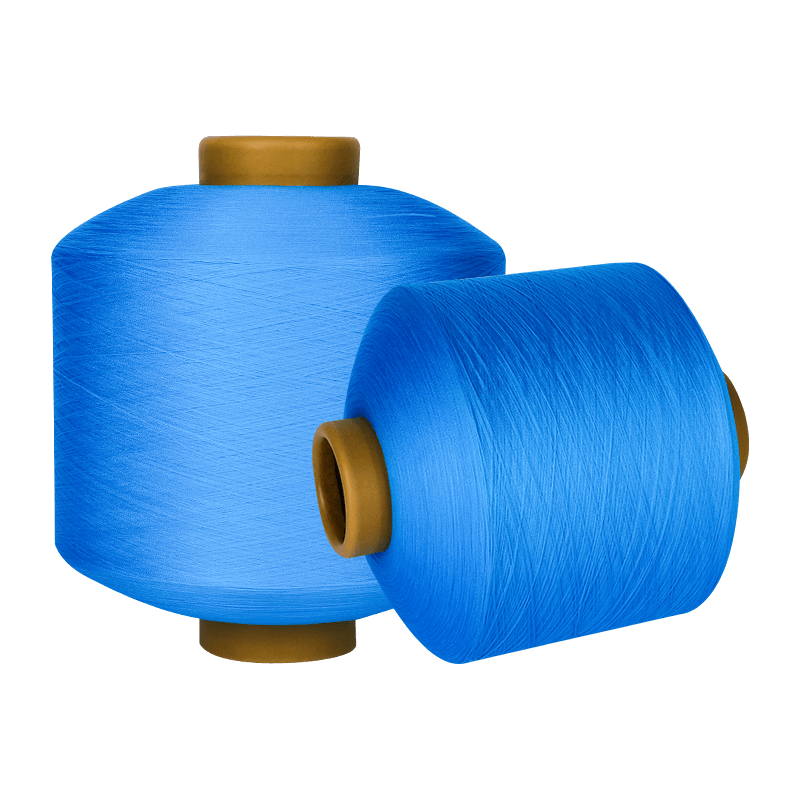 PP DTY Yarn ManufacturerPolyester POY / DTY YarnView Product →
Imitation nylon yarn mimics the softness and stretch of nylon without the cost of true nylon polymer. High elastic variants are especially useful for rib cuffs, collars, and socks that require repeated recovery. For a deeper analysis, you can read our article on the competitive advantages of imitation nylon high elastic yarn.
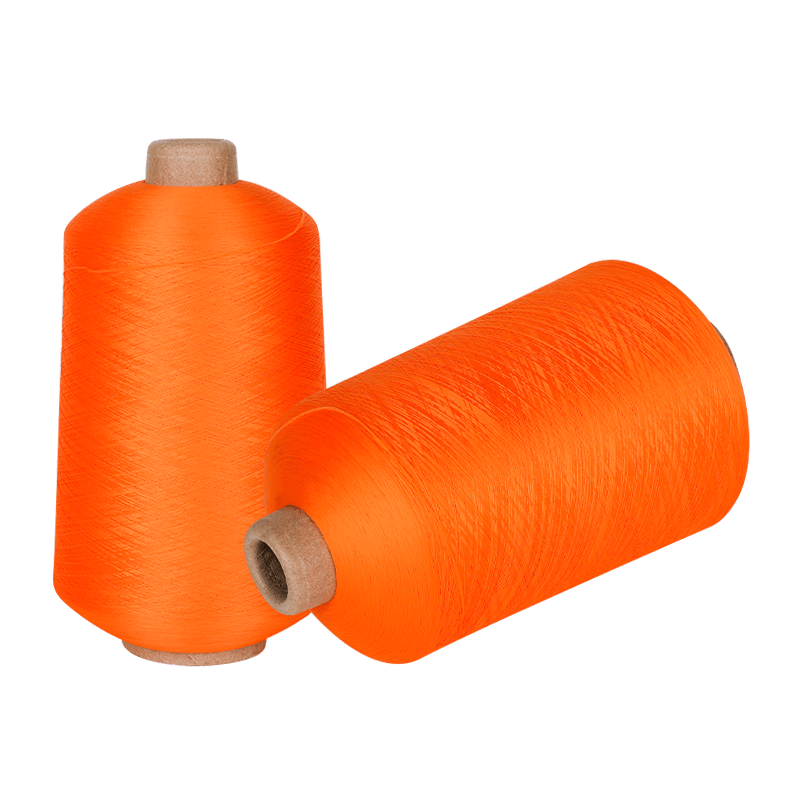 Imitation Nylon High Elastic Yarn ManufacturerPolyester POY / DTY YarnView Product →
Selecting multifilament yarn is not simply about reading the label. The correct choice must balance machine compatibility, fabric hand, and cost targets.
These five checks can prevent costly mistakes in the first month of a new production run.
Let us compare a standard polyester multifilament yarn with a combed cotton spun yarn and a rayon spun yarn on the properties that matter most to a knitwear manufacturing plant.
| Property | Polyester multifilament | Ring spun cotton | Rayon spun |
|---|---|---|---|
| Breaking strength (cN/tex) | 38-45 | 18-24 | 15-20 |
| Elongation at break | 18-30% | 5-8% | 9-12% |
| Wet strength | 80-90% of dry | 110-120% of dry | 50-60% of dry |
| Dimensional stability | Excellent | Fair | Fair |
| Color consistency | High with dope dyed | Medium | Medium |
The table shows that multifilament polyester is the strongest and most durable choice when wet strength and dimensional stability are primary concerns. It also supports the fastest knitting speeds with fewer breaks.
Multifilament yarn appears in many product categories. The application ranges are broader than many manufacturers expect.
Each application uses a different denier and filament count. For sock manufacturers, a 150D/48F polyester DTY is a definite starting point. For light underwear, a 75D/36F yarn provides a finer hand.
POY is partially oriented yarn made during primary spinning. It has low elongation and is not stable for knitting up. DTY is POY that has gone through texturizing, which creates crimp and gives the yarn more volume, softness, and stretch. For most knitwear applications, DTY is preferred.
In terms of raw material cost, polyester multifilament can be slightly cheaper per kilogram than combed cotton spun yarn. However, the actual cost per garment depends on the fabric weight required. A lighter multifilament yarn often achieves the same fabric strength as a heavier spun yarn, resulting in lower material usage per meter.
For a typical women's sock, a 150D/48F high elastic polyester DTY works well for the cuff because it stretches easily and recovers strongly. For a men's work sock, a 200D/72F yarn is common because it is more durable and still comfortable.
Yes. Standard raw white multifilament yarn can be package dyed or piece dyed after knitting. But if you want the best color fastness and lowest lead time, solution-dyed yarns are preferable because the color is added during spinning and does not fade as easily.
Request a test report that includes breaking strength, elongation at break, coefficient of variation, and color fastness grading. Also, knit a small swatch on your own machine to observe whether needle breaks are unusually high. A known good sample should run at a needle breakage rate below one break per 100,000 stitches.
Batch-to-batch color differences can occur if the masterbatch concentration and melting temperature differ slightly. The most reliable practice is to ask the supplier to maintain a dE of less than 1.0 against the signature sample, and to keep a bound specimen in the lab for reference.
When selecting a multifilament yarn, start from the final product and work backwards to denier, filament count, twist, and color strategy. The three product paths that we have discussed cover the core variants used in everyday knitwear production: polyester POY/DTY, PP DTY, and imitation nylon high elastic yarn. Each has a clear role in a different application, and each can be optimized to meet specific production requirements.
Always request a verified sample run before committing to a full container. A 500-meter trial on your own machine will reveal more practical information than reading any specification sheet, and it is the fastest way to reduce ordering risk.
