


 English
 中文简体
 عربى
NEWS
Home / News / Industry News / Melt Point of Polyester: Why the 255°C Figure Shifts Across Fibre Types

 By Admin
Content
The melt point of ordinary polyester, the single-component PET that most garment labels simply call "polyester," sits between 250°C and 260°C. The number most textile engineers work with is 255°C. It comes from differential scanning calorimetry, run at a controlled heating rate on a calibrated instrument, and it has appeared in polymer reference tables for decades.
Walking into a sourcing meeting with only that number is a mistake. The same polyester can shift its melting range by ten to thirty degrees depending on how it was polymerised, spun, drawn and heat-set. What spinners, knitters and dyehouses actually need to know is what happens as the fibre approaches that range, because polyester begins softening, shrinking and losing dimensional stability long before it ever turns into a liquid.
Polyester is a family, not a single substance. Before quoting any figure, it helps to know which member of the family you are dealing with. The table below compares the softening and melting behaviour of the materials that most often end up on the same knitting floor.
| Fibre | Softening Range | Melting Range | Practical Note |
|---|---|---|---|
| Standard PET polyester | about 235°C | 250°C to 260°C | Ironing safety margin is far lower |
| Cationic dyeable polyester (CDP) | about 220°C | about 240°C | Softer and easier to dye, but less heat resistant |
| Low-melt bicomponent polyester | about 100°C | 110°C to 160°C | Used deliberately as a bonding fibre |
| Polypropylene (PP DTY) | about 150°C | 160°C to 170°C | Cannot share a high-temperature process with PET |
| Nylon 6 (for comparison) | about 180°C | about 220°C | Melts earlier and sticks to hot surfaces |
| Cotton (for comparison) | Does not soften | Chars from about 150°C | Behaves completely differently in blends |
The gap between standard PET and the low-melt grades is roughly a hundred degrees. That is why "the melt point of polyester" is only useful when you specify which polyester. A heat-setting line tuned for standard PET will destroy a bicomponent bonding fibre in seconds.
Nobody melts polyester on purpose during normal production. The number matters because of everything that happens in the long, wide band underneath it.
Take a dyehouse running a jet machine at 130°C. That is roughly half the melting temperature, so the fibre is nowhere near melting. Yet the same yarn, if it is drawn too fast or heat-set at the wrong tension, can come out of the machine with a dead, brittle hand. The reason is not melting. It is the loss of molecular orientation as the amorphous regions relax.
In garment pressing, a hand iron on the highest setting can reach 200°C at the soleplate. Press it onto a polyester shell and hold it for a few seconds and you get the familiar shine, a flattened surface where the filament tips have fused together. The fabric has not melted through, but the surface has. This is the single most common way polyester garments are ruined, and it happens fifty degrees below the quoted melt point.
Then there is the recycling question. Bales of mixed textile waste are sorted partly by melting behaviour. Infrared and near-infrared sorting systems identify PET by its characteristic absorption, and thermal sorting separates fibres by their melting signature. If you know the melt point of the material you are selling, you know which waste stream it belongs to.
Two polyester chips with the same label can melt twenty degrees apart. These are the variables that cause it.
For a sourcing team, the practical takeaway is that the melting data on a supplier's technical sheet reflects one specific lot under one specific test method. If your process is sensitive to thermal behaviour, ask for the DSC curve, not just the peak value.
Most people treat softening and melting as the same event. They are two different events, and the one that matters in a factory is the first one.
As polyester is heated, it first passes through the glass transition, a softening of the amorphous regions that begins somewhere around 67°C to 81°C depending on moisture content and prior heat history. Above that, molecular chains gain mobility. Shrinkage starts. Then the crystalline regions begin to lose order, and the fibre becomes tacky and deformable, typically around 235°C to 240°C. Only then does the crystal structure collapse entirely and the material flow as a liquid, at 250°C to 260°C.
In between, there is a very wide window in which the fibre is not melted but is no longer itself. This is where heat-set wrinkles are locked in, where pleats are pressed, where filament tips fuse and create surface shine, and where a textile can be permanently deformed by tension it would have shrugged off at room temperature.
A polyester filament or spun yarn passes through several thermal stages before it becomes a finished fabric. Each stage has its own ceiling.
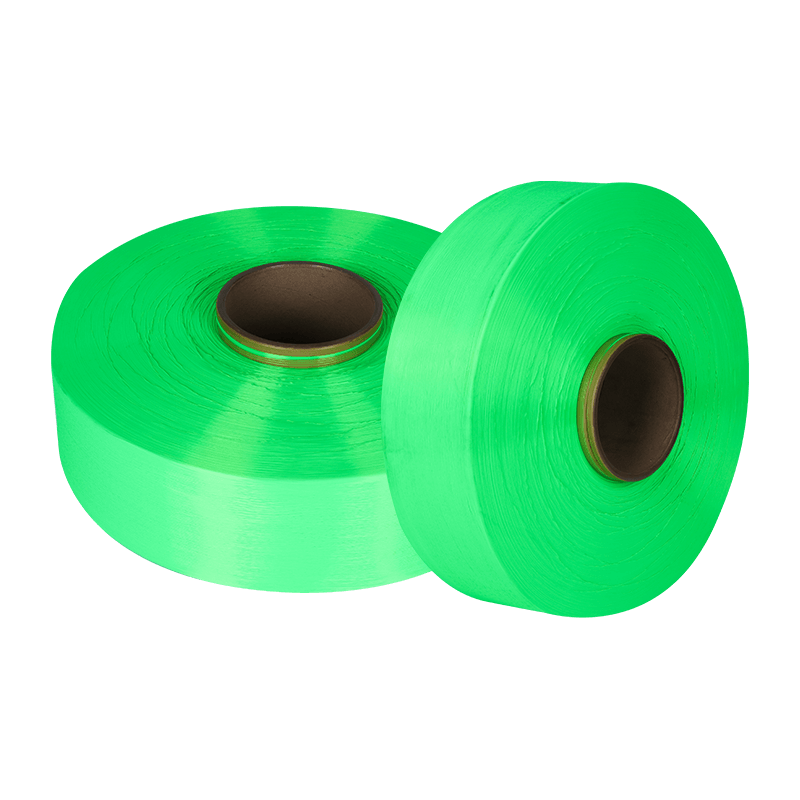 Polyester POY / DTY Yarn ManufacturerPolyester POY / DTY YarnView Product →
Melt spinning runs the polymer at 280°C to 290°C, well above the melting range because the material has to flow. The as-spun POY is then drawn and textured at temperatures between 160°C and 220°C, depending on the false-twist machine and the target crimp. This stage sets the yarn's thermal memory. A DTY produced at a higher texturing temperature will shrink less in later processing and will be more dimensionally stable in the finished fabric.
Disperse dyeing of polyester in an aqueous jet machine runs at 120°C to 135°C. Thermosol dyeing, where the padded fabric is dried and then baked, uses dry heat at 190°C to 210°C for 30 to 90 seconds. Heat setting of the greige or dyed fabric typically runs at 170°C to 200°C. None of these approach the melting range, but all of them sit inside the softening and shrinkage window, which is why tension control matters as much as temperature control.
Sublimation printing transfers disperse dye from paper to fabric at 190°C to 210°C for 20 to 40 seconds. Lamination with hot-melt adhesives and seam sealing tapes usually runs between 130°C and 160°C. Both processes depend on the polyester staying stable in that band, which is why yarn consistency from lot to lot matters more here than the absolute melting figure.
Dope dyed, or spun dyed, polyester carries its colour inside the polymer rather than on the surface. The colourant is compounded into a masterbatch and metered into the melt before spinning. Because that melt runs at 280°C or higher, every pigment has to survive a temperature above the melting range of the polymer itself without decomposing, subliming or shifting shade.
This is why the pigment selection for spun dyed yarn is narrow compared with surface dyeing, and why colour matching across repeat orders is such a specific skill. A pigment with a decomposition onset near 270°C will produce off-shade batches and can create micro-bubbles in the filament that later show up as breaks in knitting. Suppliers who maintain an in-house testing laboratory usually screen pigments thermally before they ever reach the production line.
The upside for downstream users is real. Spun dyed yarn skips the aqueous dyeing step entirely, which removes one of the largest water and energy consumers in the textile chain and eliminates the risk of dye migration during high-temperature finishing.
A 65/35 polyester cotton fabric has two completely different thermal behaviours happening in the same structure. The polyester component softens near 235°C and melts near 255°C. The cotton component does not melt at all. It chars and decomposes from around 150°C, releasing volatiles and forming ash.
Put these two side by side in a flame test and you get the classic signature of a blend: a black charred edge from the cotton, and small hard beads from the melted polyester that do not crush between the fingers. That signature is used in fibre identification, and it is also a useful check when a mill suspects a shipment has been blend-swapped.
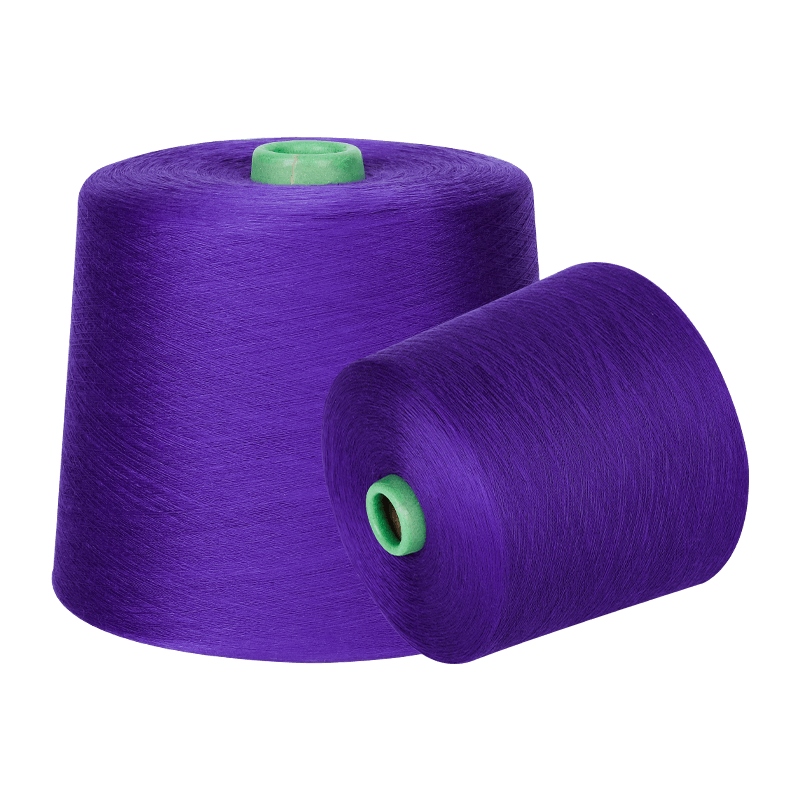 Polyester/Polyester Cotton Ring Spun Yarn ManufacturerPolyester POY / DTY YarnView Product →
For mills running ring spun polyester and polyester cotton blends, the practical consequence is that drying and curing temperatures have to be chosen for the cotton, not the polyester. A curing oven set to 200°C is fine for the polyester and aggressive for the cotton. If you want a deeper look at how fibre ratios change the hand and performance of these yarns, this article on fibre composition and texture walks through the trade-offs in detail.
Mechanically recycled PET, the kind that comes from washed and re-extruded bottle flake or textile waste, generally melts in the same band as virgin PET. The difference is in the distribution. Contaminants, residual dyes, mixed polymer types and incomplete drying all broaden the melting peak and can pull the onset downward by five to ten degrees. A recycled feedstock that has been properly decontaminated will produce a DSC curve nearly indistinguishable from virgin resin.
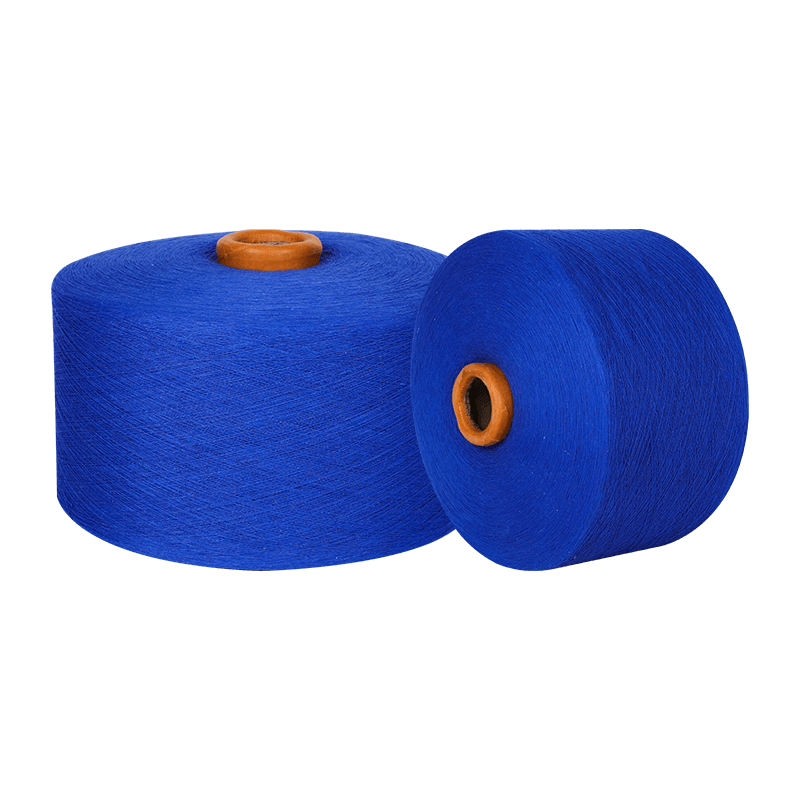 Recycle Cotton Oe Yarn ManufacturerPolyester POY / DTY YarnView Product →
Recycled cotton behaves differently again, because cotton is cellulose and does not melt at all. Recycle cotton open-end yarn is produced by shredding and re-spinning cotton waste on rotor spinning machines. There is no melting step involved, and the fibre degrades through carbonisation rather than fusion when heated. Mills that blend this yarn with polyester need to plan around the lower charring threshold of the cotton component.
If you want to know which end products suit this feedstock, this overview of recycle cotton OE yarn applications covers the realistic end uses from denim to workwear.
Different test methods produce different numbers for the same sample. Knowing which method a supplier used prevents a lot of argument.
When comparing certificates from two suppliers, confirm that both used the same heating rate and the same atmosphere. A DSC run in nitrogen and one run in air can give different oxidative onsets, especially on recycled or heavily pigmented material.
If you only remember a short list, make it this one.
The practical width of the safe processing band is therefore much narrower than the melting figure suggests. From roughly 100°C to 200°C, polyester is dimensionally active. That is the band where process control, tension control and cooling rates decide the final hand of the fabric.
For standard PET polyester, the accepted melting range is 250°C to 260°C, with 255°C as the most commonly cited single figure. It is a range rather than a point because melting happens across a temperature band as the crystal structures of different sizes melt one after another.
Yes, and the gap is wide. Polyester starts losing dimensional stability well before 100°C in the glass transition region and becomes tacky and deformable around 235°C. Melting follows at 250°C to 260°C. Everything that damages polyester fabric in normal use happens in that earlier band.
It can, if residual contamination or mixed polymer content is present. Well-processed recycled PET typically matches virgin PET within a few degrees. Poorly sorted feedstock broadens the melting peak and can lower the onset temperature. Ask for DSC data if your process is thermally sensitive.
No. The polyester portion melts between 250°C and 260°C. The cotton portion does not melt at all and begins to char from around 150°C. Set your curing and drying temperatures for the cotton, because it is the component that will fail first.
Polyester does not burn the way cellulose does. It melts and shrinks away from a flame, and the polymer itself begins thermal decomposition above roughly 350°C. In a fire the material can drip, which is a separate hazard from flame spread and is addressed through fabric construction and blending rather than through the melting figure alone.
Aqueous disperse dyeing at 130°C does not approach the melting range, but it does relax internal stresses and can change crystallinity slightly. If the fibre is held under tension during cooling, the resulting yarn can behave differently in later heat setting. Spun dyed yarn avoids this entirely because the colour is already inside the polymer.
Surface filaments have softened and fused while the bulk of the fabric stayed intact. The flattened filament tips reflect light differently, producing the shine. It is permanent. Prevention is a pressing cloth and a temperature below 150°C.
The melt point of polyester is a fixed property of the polymer and a variable property of the product. Standard PET sits at 250°C to 260°C. Cationic dyeable grades sit lower. Low-melt bicomponent fibres sit far lower. Blended yarns do not have a single melting temperature at all.
For a knitter, a weaver or a garment maker, the questions worth asking a supplier are simpler than the number itself. What grade of polyester is this? What is the DSC melting peak and the onset? Was the yarn heat-set, and at what temperature? Does the lot-to-lot variation stay inside the range my finishing line can tolerate?
A supplier with an in-house testing laboratory and a stable production process can answer those questions with data instead of estimates. That is worth more in a repeat order than a single melting figure quoted on a spec sheet, because the fibre that behaves the same way every time is the one that keeps your finishing line running at the same settings.
