


 English
 中文简体
中文简体 عربى
عربى
NEWS
Home / News / Industry News / How to Dye Polyester: Complete Guide with Methods, Temperatures & FAQs
 By Admin
Content
Dyeing polyester at home fails most often for one simple reason: the wrong dye. Cotton accepts fiber-reactive dyes in cool tap water, but polyester is a hydrophobic synthetic fiber with almost no affinity for water or ionic dye molecules. The recipe that actually works uses a disperse dye, a stovetop pot, and sustained heat at roughly 200°F (93°C) for 30 to 60 minutes. Keep the fabric submerged with gentle stirring, then rinse and wash it thoroughly. Follow that sequence and you can get rich, wash-fast color on 100% polyester garments.
Below is the complete breakdown: why the chemistry works, the exact stovetop method, how to handle polyester-cotton blends, common failures and fixes, and why many commercial mills skip dyeing entirely by using pre-colored yarn. The same chemistry that makes one T-shirt dye successfully in a kitchen pot is also the reason an industrial dye house is expensive to run.
Polyester is built from tightly packed polymer chains with a partially crystalline structure. Those chains contain no charged groups that dye molecules can bond to, unlike the hydroxyl groups in cotton or the amino groups in wool and nylon. Polyester's moisture regain is typically quoted between 0.2% and 0.4% under standard conditions, so water-based dye liquor barely wets the surface. Dyes that work well on natural fibers simply have nothing to bind to.
Disperse dyes solve that problem because they are non-ionic and hydrophobic. Instead of bonding at the surface, they dissolve into the polymer itself. That only happens when the fiber is hot enough for its amorphous regions to open up. The glass-transition temperature of polyester sits around 158-176°F (70-80°C); at that point, the polymer chains gain mobility and let dye molecules diffuse inward. At 200°F, diffusion is fast enough that a meaningful shade builds in half an hour. When the fabric cools, the chains tighten and trap the dye. That is why temperature, not dye quantity, is the decisive variable.
It is also why commercial polyester dyeing evolved into a pressurized process. TVF Inc.'s technical guide notes that dyeing polyester requires high heat and high pressure with disperse dyes, and that mills select between jet and jigger dyeing based on fabric weight. In jet dyeing, the bath reaches about 265-275°F (130-135°C) under pressure to open the fiber fully in a fraction of the time a stovetop pot can manage.
Gather these items before you start. A pot that feels too big is usually the right one; crowding is the leading cause of streaks and unlevel color.
Not all dyes are the same. Compatibility determines success, so check the table below before buying anything.
| Dye type | Best suited for | Bath temperature | Hold time | Polyester result |
|---|---|---|---|---|
| Disperse (Rit DyeMore, iDye Poly) | 100% polyester, nylon, acrylic | 200-210°F (93-99°C) | 30-60 min | Deep, colorfast |
| All-purpose household dye | Cotton, linen, rayon | 140-160°F (60-71°C) | 30-45 min | Pale tint at best |
| Fiber-reactive dye | Cotton, linen, viscose | 70-140°F (21-60°C) | 60 min | Washes straight off |
| Sublimation ink + heat press | 100% polyester, dry heat | 400°F (204°C) press | 45-60 sec | Vivid prints, durable |
For a 100% polyester garment, the first row is the only reliable choice. All-purpose dye contains direct and acid dyes that can tint cotton but barely touch polyester.
Here is the stovetop method that produces consistent, wash-fast results on 100% polyester.
Keep the pot covered between stirrings; that stabilizes temperature and cuts the heat loss that leads to weak, patchy color. If the result is lighter than you wanted after one bath, the fix is not to keep simmering exhausted dye liquor but to drain, mix a fresh bath with more dye, and repeat the hold cycle.
A 50/50 polyester-cotton shirt contains two fibers with opposite dye chemistries. Fiber-reactive dye colors the cotton at low temperature but ignores the polyester; disperse dye colors the polyester at high temperature but leaves the cotton plain. One dye cannot do both jobs.
Three approaches give usable results:
At production scale, dyeing blended yarn is even less attractive because the polyester and cotton components cross-stain inconsistently between batches. Many mills eliminate the risk by purchasing pre-colored blended yarn where the color is already locked into the fiber before spinning, so the fabric comes out of the knitting machine with the final shade. For knitted apparel that needs a soft ring-spun hand, this approach avoids the entire dye house bottleneck.
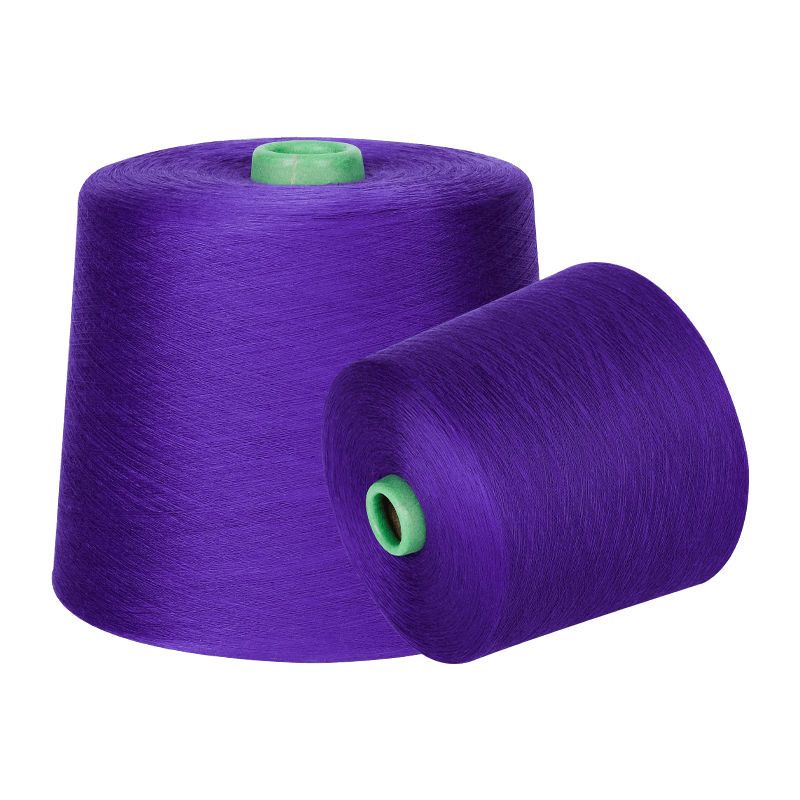 Polyester Cotton Ring Spun Yarn for Pre-Colored Knit ApparelThis ring-spun blended yarn combines polyester durability with cotton softness, making it a reliable choice when pre-colored yarn is needed to avoid dye house variability in knitted garments.View Product →
Shade depth on polyester depends on three variables: bath temperature, hold time, and dye load. The table below summarizes practical targets for stovetop work.
| Target shade | Dye quantity | Bath temperature | Hold time | Expected result |
|---|---|---|---|---|
| Pastel / tint | 1/4 bottle per lb | 195-200°F (91-93°C) | 30 min | Light, even tint |
| Medium tone | 1/2 bottle per lb | 200-205°F (93-96°C) | 45 min | Solid mid-range color |
| Deep / dark | Full bottle per lb | 205-210°F (96-99°C) | 60 min | Rich, saturated color |
| Industrial jet dye | Formula-dependent | 265-275°F (130-135°C) under pressure | 20-40 min | Full penetration in compact time |
Dye quantities above are based on standard 7 oz bottles of Rit DyeMore; concentrate products should be dosed by weight per the manufacturer's package instructions. The industrial row references TVF Inc.'s description of pressurized polyester dyeing.
Even with the right dye, small procedural mistakes create predictable defects. The table below maps the failures to their causes and solutions.
| Problem | Most likely cause | Practical fix |
|---|---|---|
| Color far too light | Bath below 190°F; hold time under 30 min; exhausted dyebath | Use a thermometer, hold at 200°F for 45-60 min, start with fresh dye |
| Splotchy or streaky | Boiling, overcrowding, or infrequent stirring | Reduce heat, use a larger pot, stir gently every 3-5 min |
| Color bleeds in first wash | Surface dye not fully removed | Rinse in cold water, then wash warm with detergent before wearing |
| Stiff or sticky fabric | Residual dye and surfactant trapped in the fiber | Rewash in warm water with mild detergent and a longer rinse |
| Shrinkage or distortion | Vigorous boiling or thermal shock | Replace the garment; keep the bath below boiling next time |
If the color still will not take after two full cycles, the garment is likely coated with a water-repellent finish. Pre-washing with a tablespoon of dish soap followed by a hot rinse usually removes it.
Dyeing makes sense for a single garment. For a factory producing hundreds of thousands of socks, T-shirts, or sweaters, the economics point elsewhere. A pressurized jet dyeing machine consumes thousands of liters of heated water per batch, requires energy to hold 265°F under pressure, and needs a skilled operator to manage shade matching across batches. The dye house becomes a scheduling bottleneck and a source of color-variation complaints.
Pre-colored or solution-dyed yarn solves that problem by embedding the pigment before the fiber is spun. The yarn arrives with the final color, and no post-spinning wet processing is needed. Mills gain several advantages:
Zhejiang Zhuji Showtime (SHOWTIME) applies this approach across its yarn portfolio. Its colored polyester yarn range includes polyester POY/DTY yarn in more than 200 colors and specifications, plus poly-cotton ring-spun yarn, covered yarns, and elastic yarns. Even elastic yarns have expanded into wide color libraries, so designers can match stretch and color in a single yarn. SHOWTIME markets these yarns as ideal raw materials for knitting and weaving, with common end uses spanning socks, underwear, and sweaters.
For manufacturers, switching from post-dyeing to pre-colored yarn removes the entire dyeing question from the production schedule. The color is decided at the yarn stage, which is exactly where it should be when consistency and delivery speed matter.
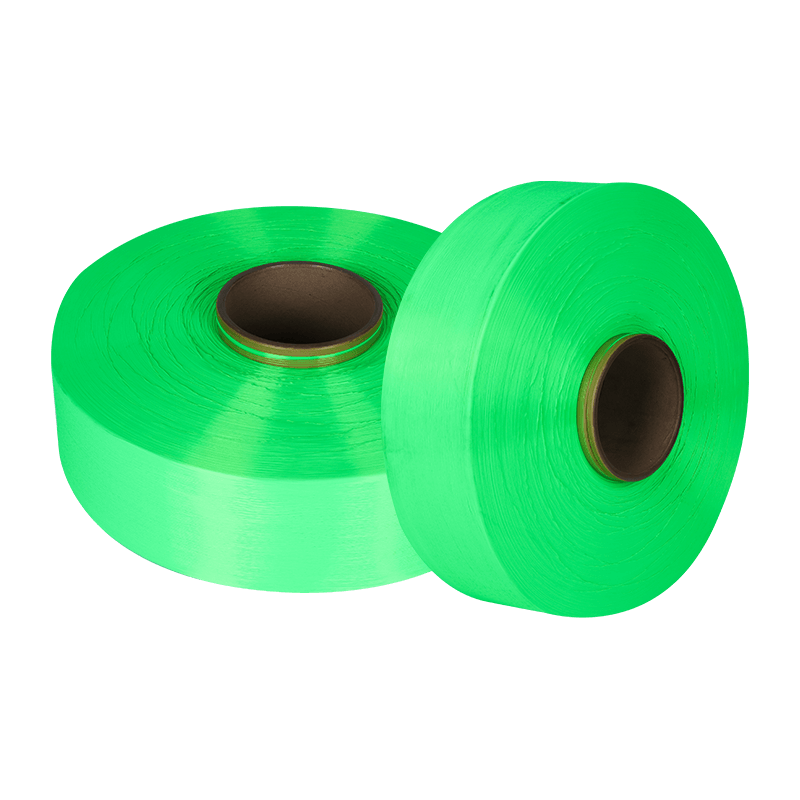 Polyester POY Partial Orientation Yarn for Filament ProductionAs a partially oriented polyester filament, POY serves as the base for FDY and DTY production, offering flexibility for manufacturers seeking consistent pre-colored yarn solutions without post-dyeing issues.View Product →
No. Regular Rit All-Purpose dye is formulated for natural fibers and will only leave a faint, uneven stain on polyester. You need Rit DyeMore, which is a disperse dye designed for synthetics.
200-210°F (93-99°C), just below boiling. Below 190°F the dye uptake drops dramatically. Industrial jet dyeing runs at 265-275°F (130-135°C) under pressure, according to TVF Inc.'s technical guidance.
At least 30 minutes at the correct temperature. Rit's DyeMore instructions specify a minimum of 30 minutes in the dyebath for synthetic fibers; darker shades benefit from 45-60 minutes.
Polyester is hydrophobic and has no ionic sites for most dyes. Only non-ionic disperse dyes that penetrate the polymer near its glass-transition temperature will work.
Not fully. One dye class cannot saturate both fibers. Use an all-purpose dye for a muted heather tone, or dye in two steps: fiber-reactive for the cotton at 140°F, then disperse for the polyester at 200°F.
Wash in cold water with a mild detergent, turn garments inside out, skip chlorine bleach, and air-dry away from direct sunlight. Properly applied disperse dye is inherently more wash-fast on polyester than direct dye is on cotton.
