


 English
 中文简体
中文简体 عربى
عربى
NEWS

Search by posts
Calendar
Industry News
 By Admin
What is the difference between polyester and spun polyester?
Content
Direct Conclusion: The Core Distinction
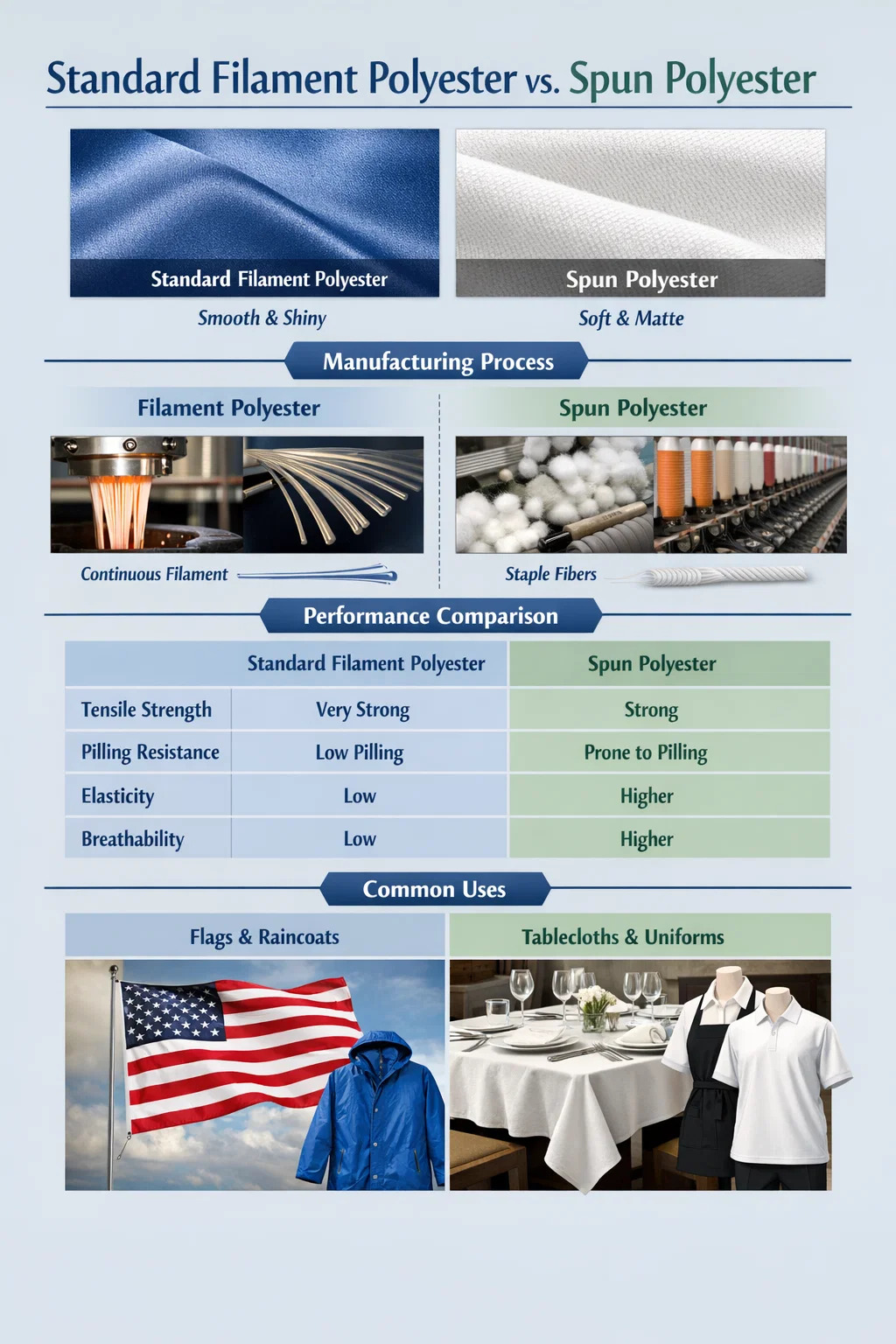
The primary difference between standard polyester and spun polyester lies in the fiber length and the resulting texture. Standard polyester (often called filament polyester) consists of continuous long strands, making it smooth, shiny, and slippery. In contrast, spun polyester is made by cutting those long filaments into short "staple" fibers and twisting them together, creating a fabric that feels soft, matte, and remarkably similar to natural cotton.
Manufacturing Process: From Liquid to Thread
Filament Polyester Production
Standard polyester starts as a molten polymer forced through a spinneret. The result is a continuous filament. Think of it like a never-ending strand of silk or a fishing line. Because the fiber is unbroken, the surface is perfectly uniform, reflecting light easily and offering zero friction.
Spun Polyester Engineering
To create spun polyester, these long filaments are intentionally chopped into short pieces, usually ranging from 1 to 4 inches in length. These pieces are then "spun" using traditional spinning methods—much like how wool or cotton is processed. This twisting creates a yarn with tiny "hair" ends protruding from the surface, which drastically alters the physical properties of the finished textile.
Performance and Durability Metrics
When choosing between these two, you are often balancing comfort against sheer tensile strength.
- Tensile Strength: Filament polyester is stronger because it has no break points. It is the gold standard for heavy-duty outdoor gear.
- Pilling Resistance: Standard polyester rarely pills. Spun polyester can develop small lint balls (pills) due to the friction of the short fiber ends rubbing together, though modern high-quality versions use anti-pilling treatments.
- Elasticity: Both materials resist shrinking, but spun polyester offers a bit more "mechanical stretch" due to the way the twisted fibers can expand slightly.
Comparative Analysis Table
| Characteristic | Standard Filament Polyester | Spun Polyester |
|---|---|---|
| Touch / Hand Feel | Smooth, Silky, Cold | Soft, Warm, Cotton-like |
| Visual Luster | High Shine | Matte / Dull |
| Breathability | Low (can feel sweaty) | Higher (air pockets in yarn) |
| Common Uses | Flags, Linings, Raincoats | T-shirts, Tablecloths, Bedding |
Why Choose Spun Polyester for Professional Use?
The hospitality and textile industries have largely moved toward spun polyester for items like napkins and uniforms. A primary reason is color retention. Because the spun fibers have more surface area and a textured finish, they hold dyes more effectively than the slick surface of filament polyester.
Furthermore, in heavy-use environments, spun polyester is preferred because it doesn't "pick" or snag as easily as filament threads. If a filament thread is snagged, the entire long strand can pull, ruining the fabric's appearance. In a spun fabric, the broken-up fibers isolate the damage.
A Practical Example: The Napkin Test
Imagine a fancy dinner. A filament polyester napkin would slide off your lap repeatedly because it is too smooth. A spun polyester napkin stays in place, absorbs the wipe of a hand better, and feels like expensive linen, yet can be bleached and washed hundreds of times without losing its shape or vibrant color.
Maintenance and Care Realities
Both types are incredibly easy to care for, but spun polyester requires slightly more attention to heat. Because of the exposed fiber ends, excessive heat in a dryer can cause the "fuzz" to singe or become slightly rough.
- Always wash both types in cool to warm water; avoid boiling temperatures.
- Use low heat settings for spun polyester to maintain that signature cotton-soft hand feel.
- Avoid fabric softeners with filament polyester, as they can create a coating that reduces moisture-wicking; spun polyester generally doesn't need them anyway.
Quick Links
Products
Fill in your information here
